Ingrown Toenail
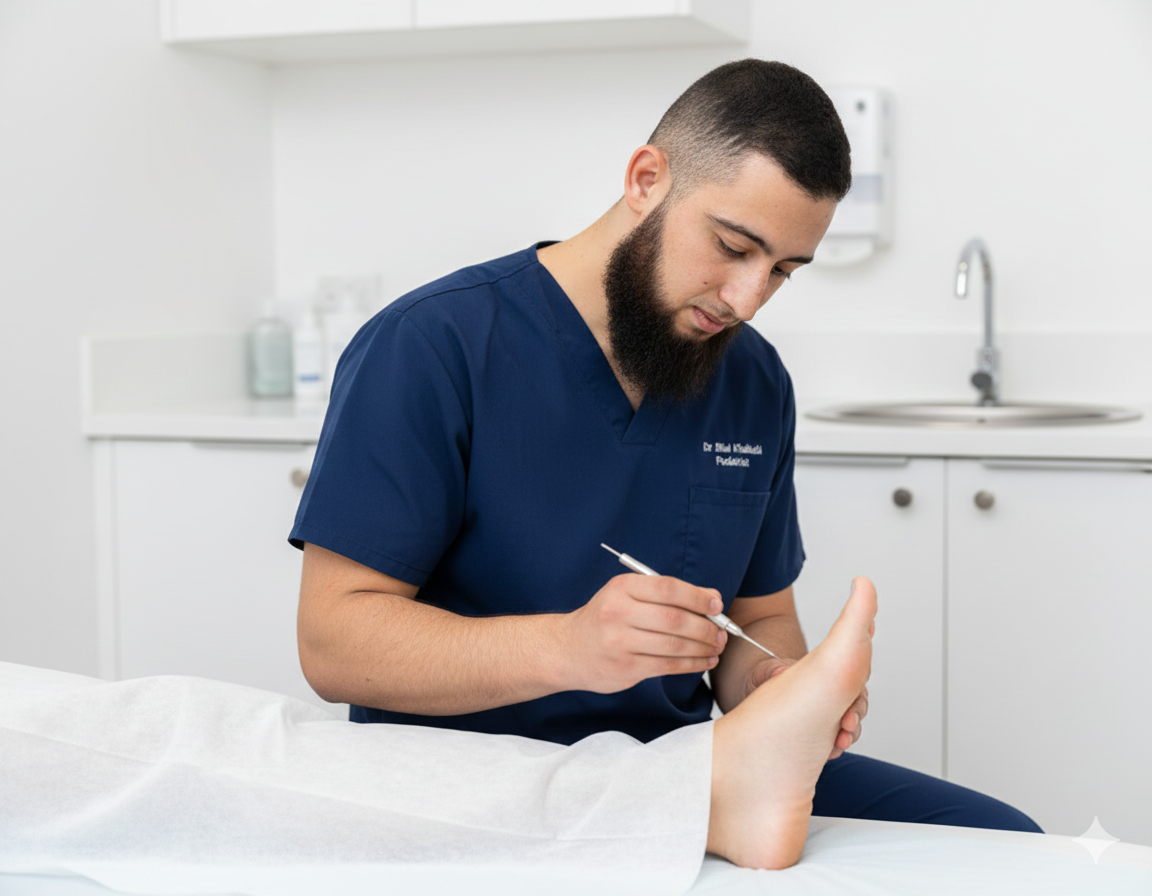
Ingrown toenails occur when the nail edge grows into the surrounding skin, causing pain, inflammation and sometimes infection. This page provides general information about ingrown toenails and outlines podiatry management options such as conservative care, antiseptic management, nail bracing and partial nail avulsion.
What is an ingrown toenail?
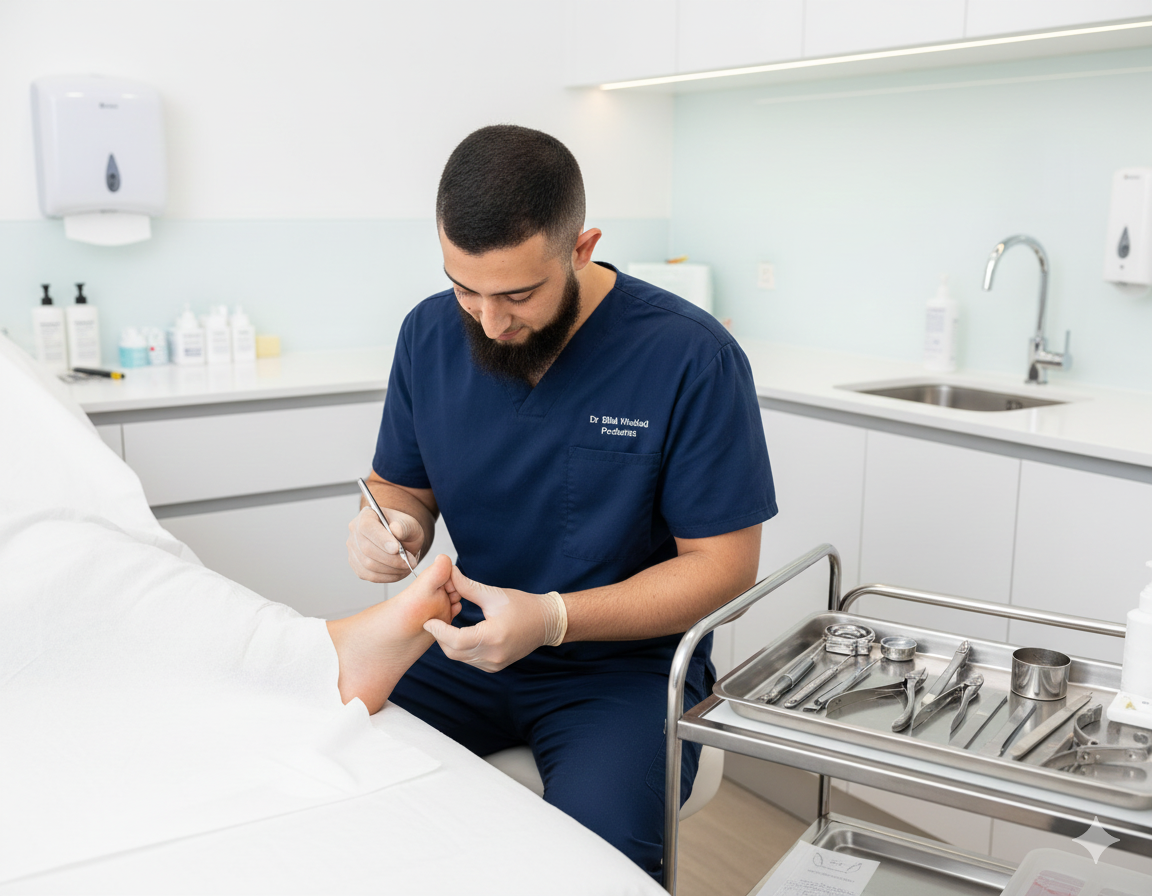
An ingrown toenail occurs when the nail edge presses into or grows into the surrounding skin. This can lead to pain, redness, swelling and, in some cases, infection. Ingrown toenails most commonly affect the big toe but can occur on any toe.
Ingrown toenails may be influenced by nail shape, footwear pressure, activity levels or nail‑cutting patterns. They can also occur alongside other conditions such as bunions, forefoot nerve pain, plantar heel pain or ankle sprains.
Early assessment can help identify contributing factors and discuss management options such as conservative care, footwear planning and, where appropriate, minor nail procedures.
Common symptoms
Ingrown toenails may cause discomfort depending on severity and infection level. Common features include:
- Pain along the nail edge, often worse in shoes
- Redness and swelling around the nail fold
- Tenderness when touching the nail corner
- Drainage or pus if infection is present
- Overgrown skin or tissue around the nail
- Difficulty walking due to pressure pain
How ingrown toenails are diagnosed
Diagnosis is usually clinical and based on nail shape, skin changes and symptom pattern. A podiatry consultation may involve reviewing footwear, activity levels and nail‑cutting habits.
Nail assessment
Reviews nail curvature, pressure points and skin involvement.
Infection screening
Assesses redness, discharge and swelling.
Footwear review
Considers pressure from tight or narrow shoes.
Nail‑cutting pattern
Discusses trimming habits and prevention strategies.
Referral (rare)
May be considered for severe infection cases.
Management options for ingrown toenails
Management is tailored to severity, infection level and recurrence history.
Conservative nail care
Trimming and gently lifting the nail edge to reduce pressure.
Antiseptic management
May be discussed to support healing and reduce infection risk.
Nail bracing
May be considered to help guide nail growth direction.
Partial nail avulsion
Minor procedure for recurring or severe cases.
Permanent nail correction
May be discussed to help reduce repeated ingrowth.
Aftercare plan
Supports healing and long‑term prevention.
Ingrown toenails may coexist with other foot issues such as bunions, Morton’s neuroma, plantar heel pain or plantar fasciitis. Where appropriate, overall foot mechanics and loading patterns may be discussed as part of a broader management plan.
Considering early assessment
Ingrown toenails can become more uncomfortable over time, particularly if infection develops or if footwear pressure continues. Early assessment allows contributing factors such as nail shape, footwear and activity levels to be discussed and may help reduce the likelihood of recurrent episodes.
If you are also experiencing other foot concerns such as heel pain, heel pain in children or Achilles tendon discomfort, these may be considered during a consultation to provide a more complete picture of your foot health.
About Podiatry & Injury Clinic
Podiatry consultations
Consultations are available for a range of foot and lower‑limb concerns.
Evidence‑informed care
Management options are discussed with reference to current clinical knowledge.
Patient‑centred approach
Plans are tailored to individual circumstances and goals.
For more information about other conditions, you can visit our conditions overview or read about plantar warts, sports‑related foot and ankle issues and ankle sprains.

.png)