Morton's Neuroma
Experiencing burning pain, tingling, or numbness in the ball of your foot? Morton's neuroma is a nerve irritation commonly found between the third and fourth toes. Our podiatrists provide thorough assessment and structured management plans to help reduce pain and improve comfort in day-to-day activities.
What Is Morton's Neuroma?
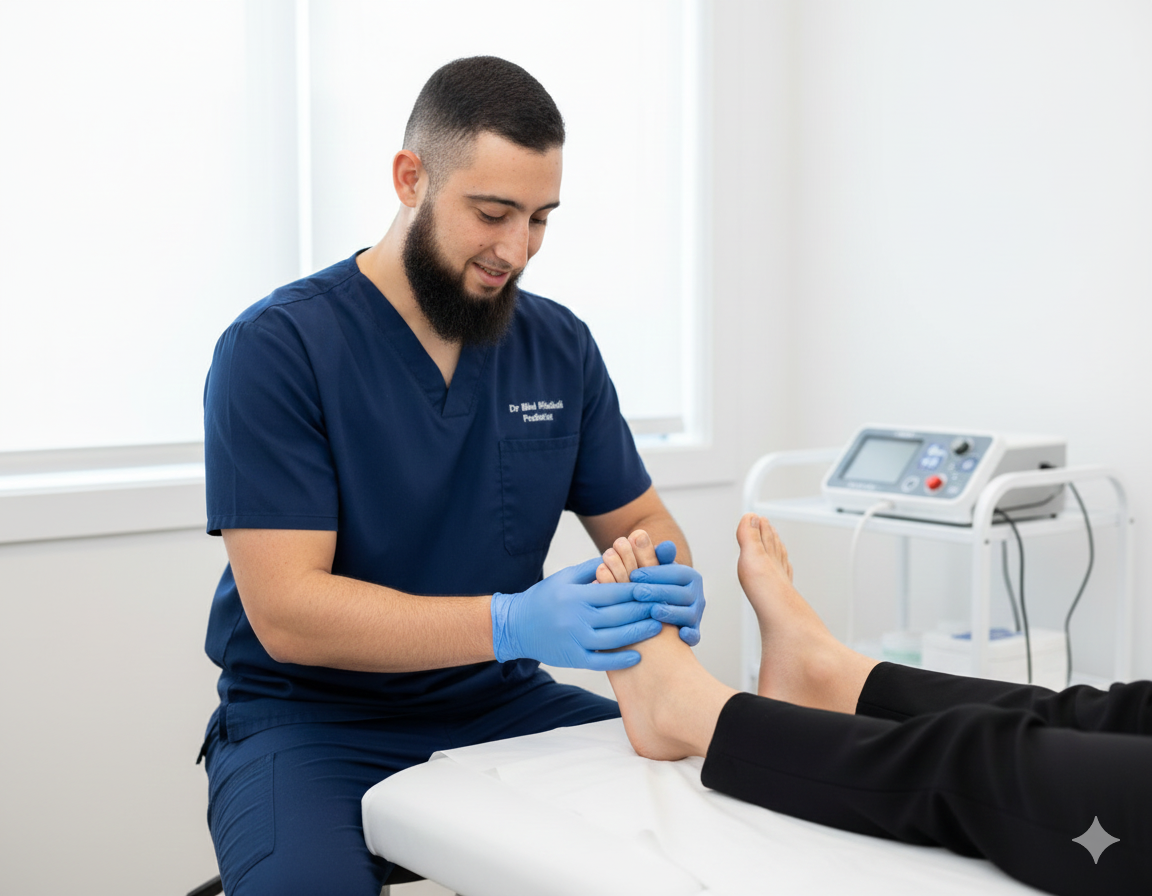
Morton's neuroma refers to irritation and thickening of a small nerve that runs between the metatarsal bones in the forefoot, most commonly between the third and fourth toes. This irritation can lead to pain, burning, or tingling in the ball of the foot and toes.
The condition is often associated with footwear that compresses the forefoot, repetitive loading through the ball of the foot, or certain foot mechanics that increase pressure on the nerve. Symptoms may be more noticeable when walking in tight or high-heeled shoes and can ease when shoes are removed.
Contributing factors may include: narrow or tight footwear, high heels, increased forefoot loading, certain sports or activities, and individual foot structure or biomechanics.
Symptoms of Morton's Neuroma
Morton's neuroma typically presents as nerve-related pain in the forefoot. Symptoms can vary from mild discomfort to more noticeable burning or tingling.
- Burning forefoot pain often described as feeling like stepping on a pebble
- Numbness or tingling in the toes or ball of the foot
- Shooting pain that may worsen in tight or narrow shoes
- Pain improves barefoot with relief when shoes are removed
- Cramping sensation under the forefoot
- Clicking sensation sometimes felt between the toes when the forefoot is squeezed
How We Diagnose Morton's Neuroma
Assessment focuses on nerve compression, footwear, and how the forefoot is loaded during walking and activity.
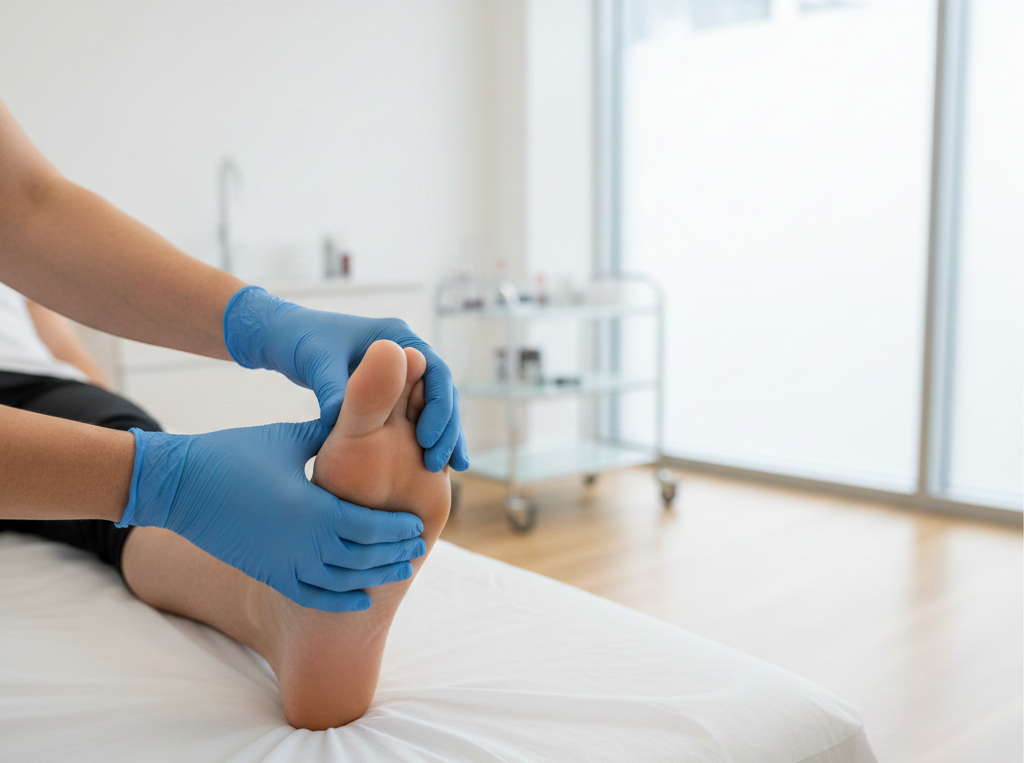
Mulder's Click Test
Checks for neuroma response when the forefoot is gently compressed.
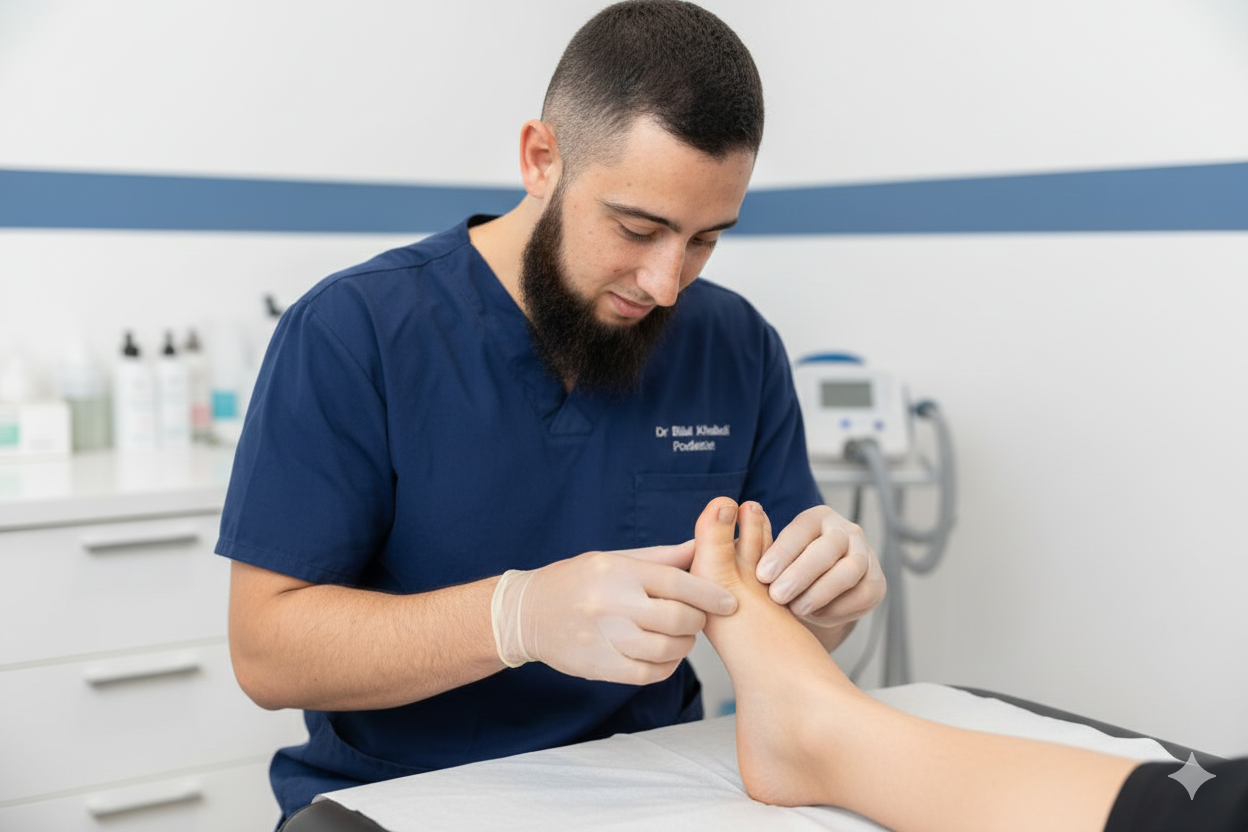
Forefoot Palpation
Identifies the area of nerve irritation and tenderness.
Footwear Assessment
Reviews shoe shape, toe-box width, and forefoot pressure.
Biomechanical Screening
Assesses forefoot loading patterns and overall foot mechanics.
Imaging Referral
Ultrasound or MRI may be considered if the diagnosis is unclear.
How We Treat Morton's Neuroma
Management aims to reduce nerve irritation, improve comfort, and support forefoot function.
Footwear Advice
Guidance on wider toe-box shoes and forefoot cushioning to reduce compression.
Metatarsal Pads
Positioned to help offload the nerve and reduce pressure.
Orthotics
Custom or prefabricated devices to improve pressure distribution under the forefoot.
Manual Therapy
Targeted techniques to improve forefoot mobility and comfort.
Symptom Management
Individualised plans that may include activity modification and load management.
Injection Referral (if appropriate)
Referral may be considered for cases that do not respond to conservative care.
Orthotic Therapy & Footwear for Morton's Neuroma
Adjusting footwear and using orthotic devices can play an important role in managing Morton's neuroma. By improving how pressure is distributed under the forefoot, nerve irritation may be reduced and comfort improved.
- Forefoot offloading: orthotics and metatarsal pads can help shift load away from the irritated nerve.
- Support for foot mechanics: devices may assist with overall foot alignment and function.
- Footwear changes: wider toe-box shoes and appropriate cushioning can reduce compression across the forefoot.
Orthotic therapy is tailored to each person’s foot structure, symptoms, and activity level. If orthotics are recommended, they are usually combined with footwear advice and a broader management plan. You can read more about our approach on our Orthotic Therapy page.
Why Early Assessment Matters
Seeking assessment early for forefoot pain can help prevent symptoms from becoming more persistent or limiting. When nerve-related pain is left unaddressed, people may change the way they walk or stand, which can place extra stress on other areas.
- Ongoing discomfort that may interfere with daily activities or exercise.
- Compensatory patterns in the knees, hips, or back due to altered walking.
- Reduced activity levels and difficulty maintaining usual routines.
- Impact on footwear choices and comfort in work or social settings.
Early assessment allows a structured plan to be put in place, focusing on footwear, load management, and forefoot support. Many people notice improvement over time when these factors are addressed consistently.
Why Choose Our Clinic for Morton's Neuroma
Experienced Podiatrists
Our podiatrists regularly see forefoot conditions, including Morton's neuroma.
Evidence-Based Management
We use current research and clinical reasoning to guide treatment plans.
Patient-Centred Care
Plans are tailored to your goals, activities, and comfort levels.
.png)