Plantar Heel Pain
Plantar heel pain (sometimes described as plantar fasciitis or plantar fasciopathy) refers to discomfort under the heel that may be related to the plantar fascia and surrounding structures. This page provides general information about plantar heel pain and outlines podiatry management options such as exercise programs, footwear changes and orthotic therapy that may be discussed during an individual consultation.
What is plantar heel pain?
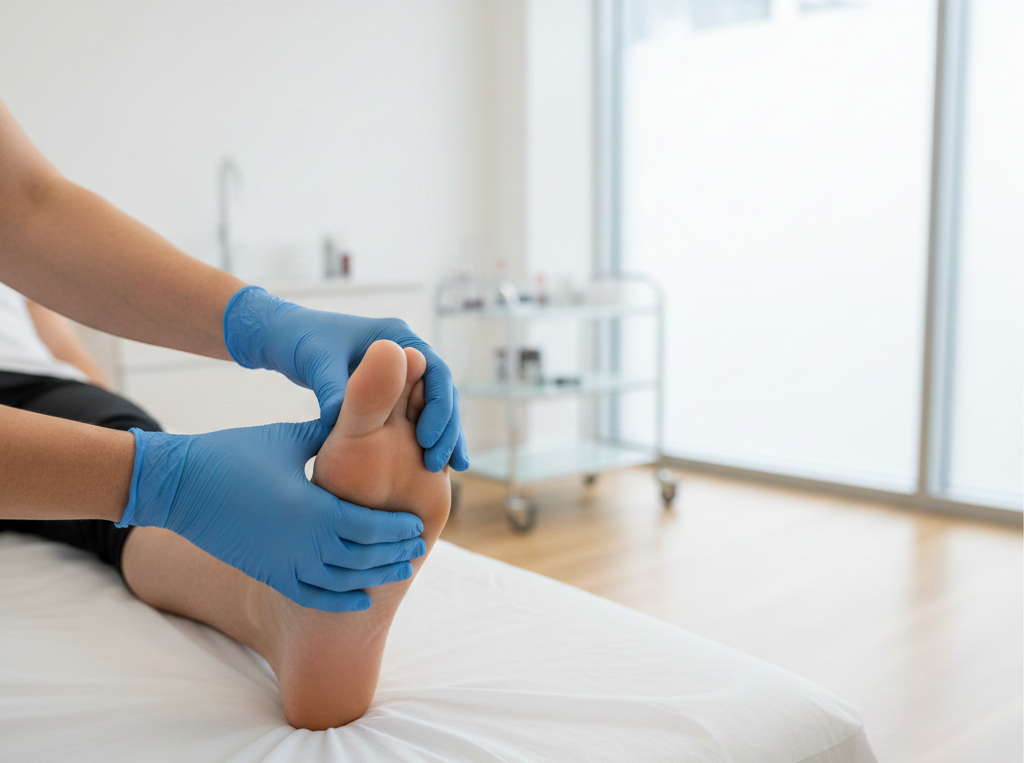
Plantar heel pain is a descriptive term for discomfort felt under or around the heel. It is commonly associated with the plantar fascia, a band of tissue that runs along the bottom of the foot from the heel towards the toes. Changes in load, activity or foot mechanics may contribute to symptoms in this area.
People who spend long periods standing, walking or running, or who have recently changed their activity levels, footwear or surfaces, may notice heel discomfort. Some individuals with plantar fasciitis, Severs disease or other sports-related conditions can experience similar symptoms, and a podiatry assessment can help explore possible contributing factors.
Common contributing factors may include:
- Changes in activity levels, training load or work demands
- Footwear that provides limited cushioning or support
- Foot posture such as increased pronation or reduced arch support
- Reduced calf or ankle flexibility
- Standing or walking on hard surfaces for extended periods
Common symptoms of plantar heel pain
Symptoms can vary between individuals. The following are commonly reported features and are provided as general information only. A podiatry consultation is required for assessment of your specific situation.
- Heel discomfort on first steps – some people notice pain when getting out of bed or after sitting.
- Pain after rest – symptoms may return when walking again after a period of rest.
- Tenderness under the heel – the area may feel sensitive when pressed.
- Discomfort with walking or running – longer walks, running or sport may increase symptoms.
- Tightness in the calf or arch – reduced flexibility can be associated with heel pain.
- Fatigue with prolonged standing – standing for extended periods may feel uncomfortable.
If you notice similar symptoms, you may wish to discuss them with a podiatrist or your general practitioner. Information on related conditions such as ankle sprain, Achilles tendonitis and Morton’s neuroma is also available on our conditions page.
Assessment and contributing factors
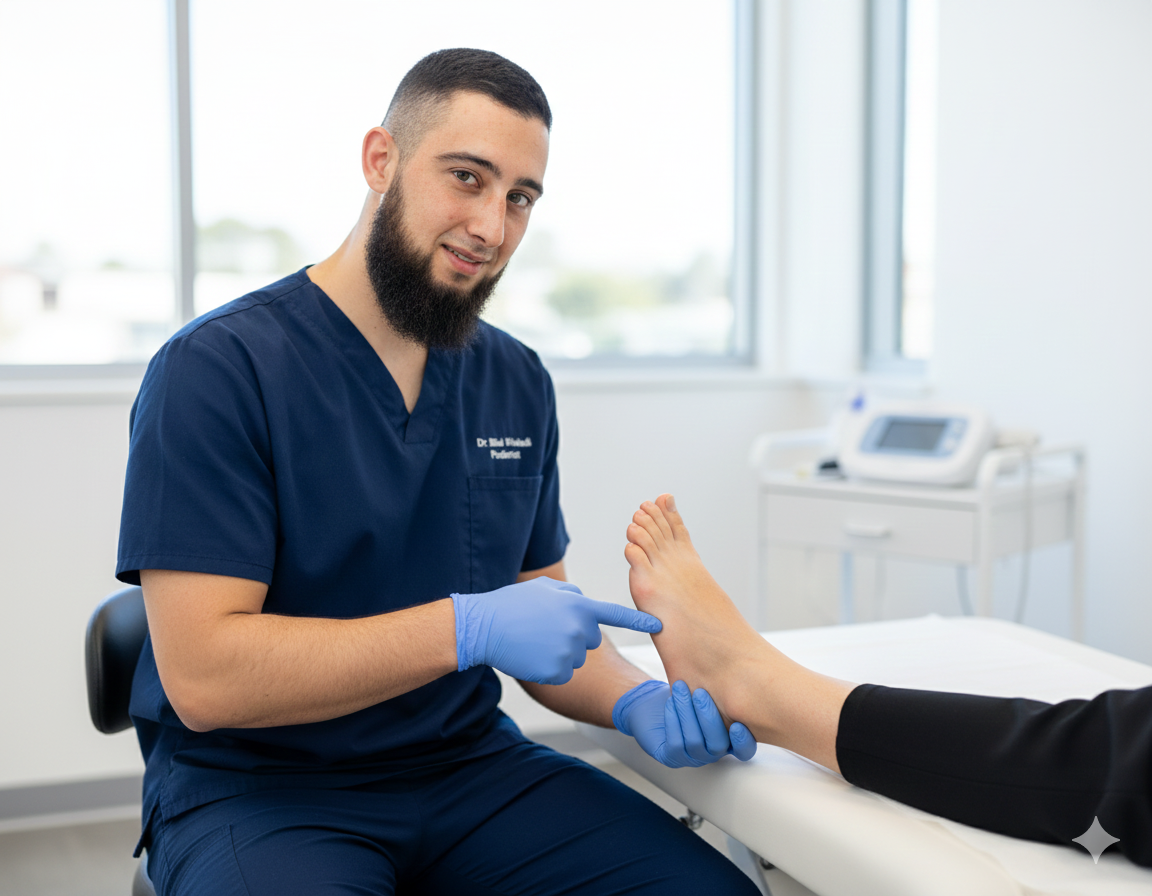
A podiatry consultation for plantar heel pain generally involves discussing your history, symptoms and daily activities. The aim is to understand how load, footwear and foot mechanics may be contributing to your heel discomfort and to consider appropriate management options.
Clinical history and symptom review
Discussion of onset, location of pain, activity levels and previous episodes.
Gait and movement assessment
Observation of walking pattern and how the foot and ankle move during stance.
Footwear and surface review
Consideration of shoes, insoles and typical surfaces used at work, home or sport.
Foot posture and flexibility
Assessment of arch height, calf flexibility and ankle range of motion.
Referral if required
Where appropriate, your podiatrist may discuss referral to your GP or imaging services.
Management options for plantar heel pain
Management plans are tailored to the individual and may include a combination of load modification, exercise, footwear changes and foot supports. The information below is general and does not replace personalised advice.
Activity and load modification
Adjusting walking, running or standing time and gradually changing load may help reduce irritation around the heel. This can be discussed alongside other sports-related conditions.
Stretching and strengthening programs
Calf and plantar fascia stretches, as well as strengthening exercises for the foot and lower limb, may be included in a management plan. More information is available on our stretching and strengthening pages, and in our illustrated plantar fasciitis exercise guide.
Supportive footwear advice
Reviewing footwear and discussing options with improved cushioning or structure can be part of managing plantar heel pain. This may complement other approaches such as soft tissue therapy or strapping.
Orthotic therapy and heel supports
Foot orthoses and heel supports may be considered to help redistribute load under the heel and support the arch. Further information is available on our orthotic therapy page.
Manual therapy and mobilisations
Some individuals may benefit from approaches such as foot mobilisations or soft tissue techniques, depending on clinical findings and preferences.
Adjunctive therapies
In selected cases, adjunctive options such as prolotherapy and neural therapy or dry needling may be discussed. These are considered in the context of your overall health and goals.
Orthotic therapy and other supports for plantar heel pain
Orthotic therapy is one of several options that may be considered when managing plantar heel pain. Foot orthoses can be used to modify how load is distributed under the heel and arch, and may be combined with footwear changes, exercise programs and other podiatry interventions.
At the Podiatry and Injury Clinic, orthotic therapy is discussed alongside other approaches such as soft tissue therapy, strapping, foot mobilisations and stretching programs. The choice of support depends on your individual presentation, footwear preferences and daily activities.
Orthoses may be:
- Prefabricated devices selected to match foot shape and footwear
- Custom devices prescribed following a podiatry assessment
- Combined with heel cups or insoles to adjust pressure under the heel
If you are interested in orthotic therapy for plantar heel pain, you can read more on our orthotic therapy page or submit an enquiry via the contact page. Any decision to use orthoses is made in consultation with you and may involve discussion with your general practitioner or other health professionals where appropriate.
Considering early assessment
Heel pain can affect daily activities such as walking, work and recreation. Seeking assessment when symptoms are persistent or changing can help clarify possible contributing factors and allow a management plan to be discussed. This may include advice on activity levels, footwear, exercises and supports.
- Ongoing discomfort may influence how you walk or stand, which can place different loads on other joints.
- Symptoms that interfere with work, sport or daily tasks may benefit from a structured management plan.
- If pain is worsening, associated with swelling, or accompanied by other health concerns, it is important to seek medical advice promptly.
The information on this page is general in nature and does not replace individual medical advice. If you have heel pain, please consult your general practitioner or a registered podiatrist to discuss your specific situation.
About the Podiatry and Injury Clinic
Podiatry consultations
The clinic provides podiatry consultations for a range of foot and ankle concerns, including plantar heel pain, plantar fasciitis and other musculoskeletal conditions.
Evidence-informed care
Management plans are based on current clinical guidelines and research, combined with your goals and preferences. Options such as orthotic therapy, soft tissue therapy and exercise programs may be discussed.
Person-centred approach
Management is planned in collaboration with you, taking into account your work, sport, lifestyle and health history. Where appropriate, communication with your general practitioner or other health professionals may be recommended.
.png)