Plantar Wart
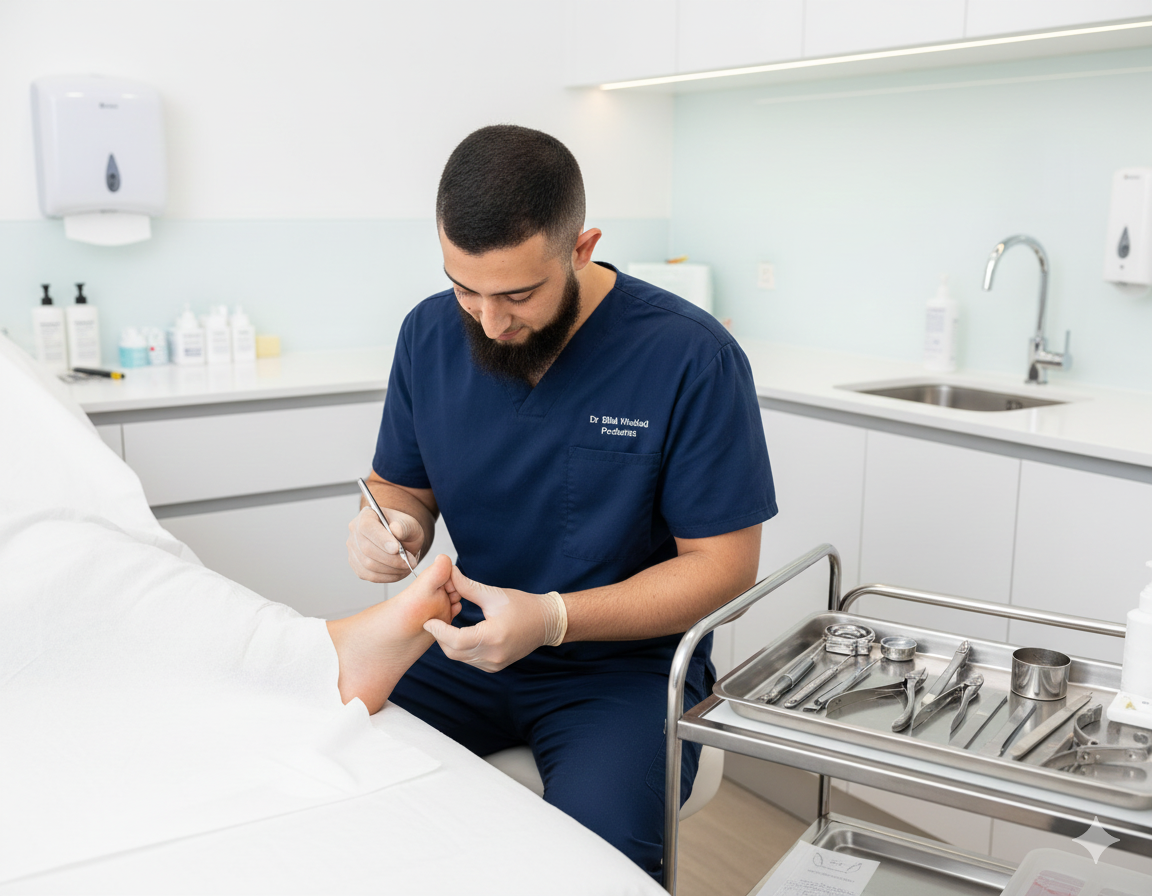
Plantar warts (verrucae) are viral skin lesions that develop on the bottom of the foot. They can become painful due to pressure from standing and walking. This page provides general information about plantar warts and outlines podiatry management options such as debridement, topical therapy, cryotherapy, offloading and hygiene guidance.
What are plantar warts?
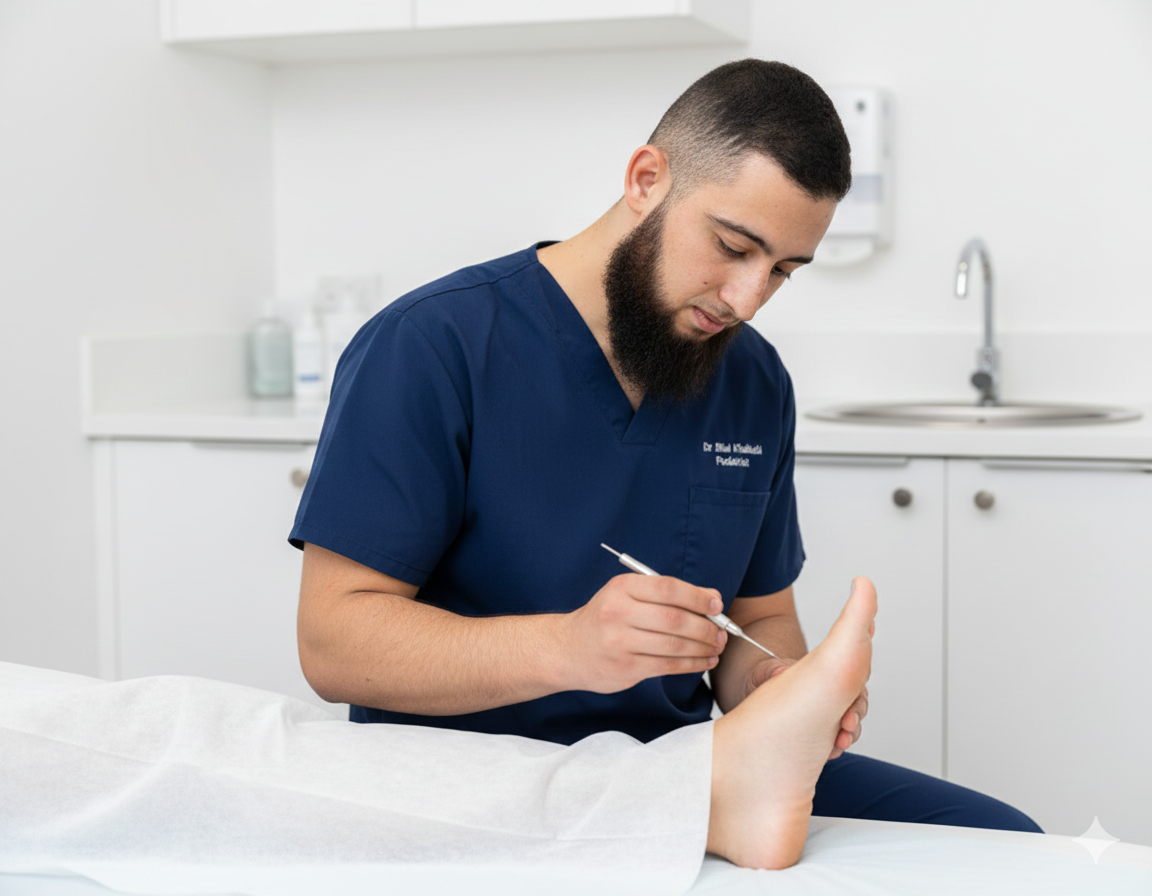
Plantar warts (verrucae) are viral skin lesions caused by the human papillomavirus (HPV). They commonly appear on weight‑bearing areas of the foot such as the heel or forefoot. Because they grow inward under pressure, they can become painful when walking or standing.
Plantar warts may look like thickened skin or callus, but they often contain small black dots (tiny clotted blood vessels) and disrupt normal skin lines. Some people develop a single wart, while others develop clusters known as mosaic warts.
Warts can spread through direct contact or shared surfaces such as pools, gyms and change rooms. They may also be confused with other conditions such as ingrown toenails, bunion‑related callus, forefoot nerve pain or plantar heel pain.
Common symptoms
Plantar warts may cause discomfort depending on their size and location. Common features include:
- Rough, raised spot on the sole of the foot
- Pain with pressure, especially when walking
- Small black dots inside the lesion
- Thickened skin around the wart
- Discomfort barefoot on hard surfaces
- Multiple warts or mosaic clusters
How plantar warts are diagnosed
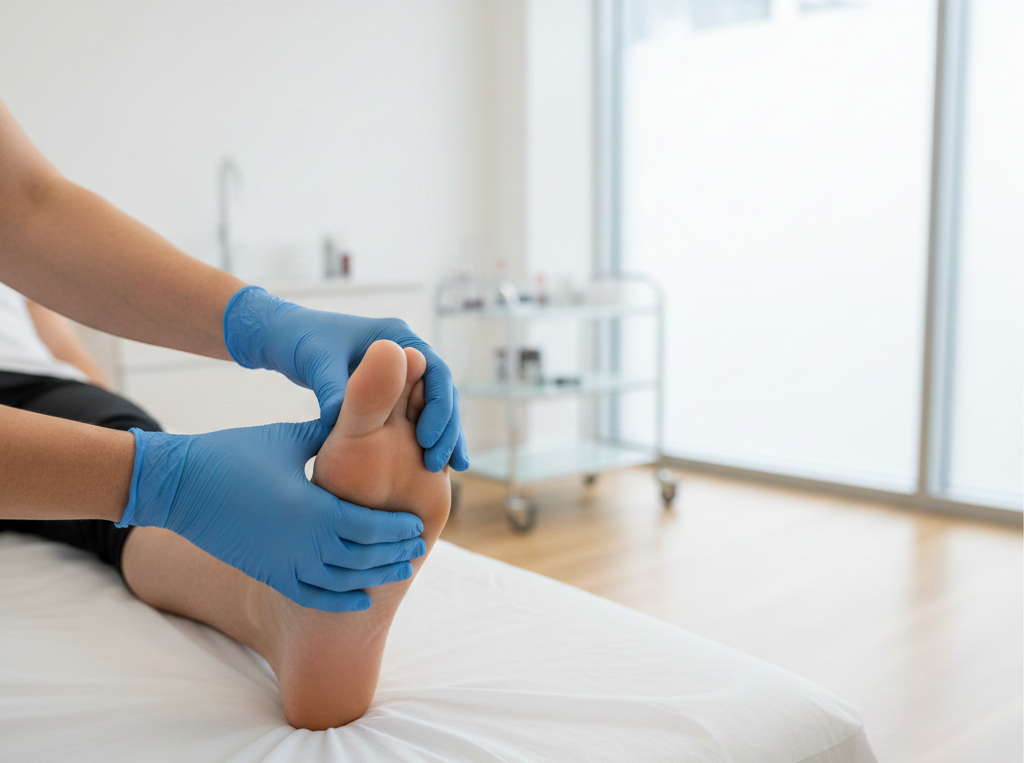
Diagnosis is usually clinical and based on appearance, texture and symptom pattern. A podiatry consultation may involve reviewing your activity levels, footwear and hygiene practices.
Skin examination
Assesses wart texture, pattern and depth.
Pressure test
Warts often hurt with side‑to‑side pressure.
Debridement check
Reveals black dots (capillaries) typical of warts.
Hygiene review
Discusses prevention and spread reduction.
Referral if needed
Dermatology input may be considered if uncertain.
Management options for plantar warts
Management is tailored to the wart type, size, location and symptom severity.
Debridement
Reduces thickness and discomfort during walking.
Topical therapy
Clinic‑directed options may be discussed depending on presentation.
Cryotherapy or acid therapy
May be considered depending on wart size and location.
Offloading padding
Helps reduce pressure and improve comfort.
Hygiene guidance
Supports prevention and reduces spread risk.
Follow‑up review
Monitors progress and discusses further options if required.
In some cases, plantar warts may coexist with other foot issues such as plantar heel pain, plantar fasciitis or sports‑related conditions. Your podiatry consultation may also consider load management, footwear and, where appropriate, orthotic therapy, foot mobilisations or strapping for associated symptoms.
Considering early assessment
While some plantar warts may resolve over time, persistent or painful lesions can affect comfort, activity and confidence. Early assessment allows discussion of management options, footwear, hygiene and load modification.
- Ongoing discomfort when standing, walking or exercising
- Difficulty with barefoot activities or sports
- Concern about spreading warts to other family members
- Uncertainty about whether the lesion is a wart, corn or callus
If you are also experiencing heel pain, you may find it helpful to read more about plantar heel pain, plantar fasciitis or Severs disease in children.
About Podiatry & Injury Clinic
Podiatry & Injury Clinic provides foot and lower‑limb consultations in Bankstown, supporting people with conditions such as plantar heel pain, plantar fasciitis, Achilles tendonitis, ankle sprain, Morton’s neuroma, bunions and ingrown toenails.
Management plans may include education, load modification, footwear discussion and, where appropriate, treatment options such as soft tissue therapy, stretching programs, strengthening exercises, strapping, orthotic therapy, foot mobilisations and dry needling, depending on individual needs.
If you would like to discuss your foot symptoms, you can submit an enquiry via our contact page or read more about other foot and ankle conditions.
.png)