Sports Foot & Ankle Conditions
Foot and ankle injuries are extremely common in running, field sports, court sports and gym training. Many sports injuries respond well to load management, footwear changes and orthotic therapy. This page provides general information about sports-related foot and ankle conditions and outlines podiatry management options.
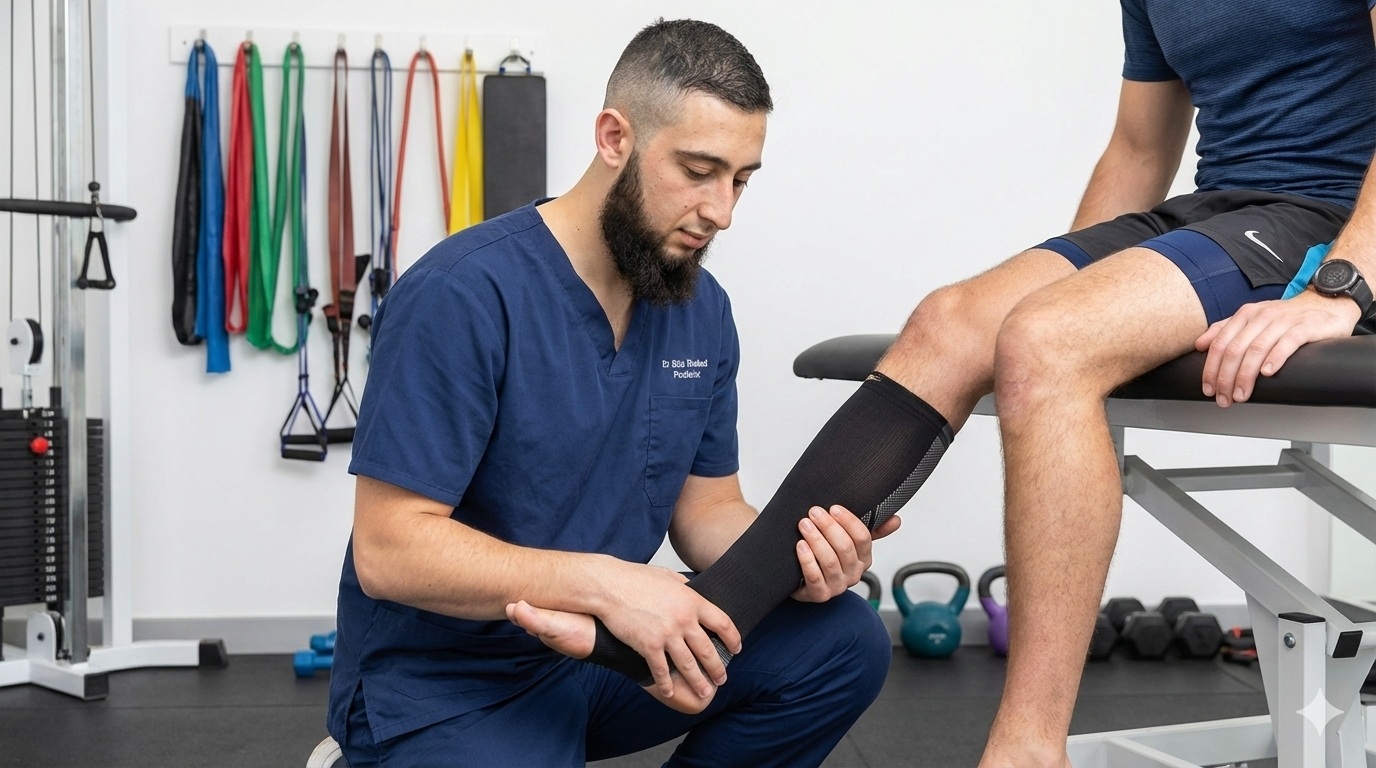
Sports Foot & Ankle Injuries
Sports foot and ankle injuries often develop from repetitive loading, sudden changes in training volume, footwear issues or biomechanical factors such as flat feet, high arches or instability. These injuries commonly affect runners, footballers, netballers, basketball players, gym users and people returning to sport after time off.
Many sports conditions respond well to orthotic therapy, strengthening, stretching, strapping and load modification. Orthotics may be considered when foot posture contributes to overload, such as in plantar fasciitis, Achilles tendonitis, Morton’s neuroma, ankle instability and Sever’s disease in children.
Sports injuries may present as pain during activity, stiffness after training, reduced performance, or difficulty loading the foot. Early assessment helps identify contributing factors and discuss management options tailored to your sport and goals.
Common Sports Foot & Ankle Conditions
Below are common sports-related conditions frequently managed with podiatry care and, where appropriate, orthotic therapy.
- Plantar fasciitis – heel pain linked to running load, foot posture and footwear (learn more)
- Plantar heel pain – pain under the heel during sport (learn more)
- Achilles tendonitis – pain at the back of the heel or tendon (learn more)
- Shin splints (medial tibial stress) – common in running and jumping sports
- Ankle sprains & instability – repeated rolling of the ankle (learn more)
- Forefoot overload – pain under the ball of the foot (metatarsalgia)
- Morton’s neuroma – nerve pain between the toes (learn more)
- Sesamoiditis – pain under the big toe joint
- Flat feet / over‑pronation – may contribute to overload injuries
- High arches – reduced shock absorption leading to impact pain
- Sever’s disease (children) – heel pain in growing athletes (learn more)
Many of these conditions respond well to orthotic therapy, especially when foot posture or load distribution contributes to symptoms.
How Sports Foot & Ankle Injuries Are Diagnosed
Diagnosis focuses on identifying load-related factors, movement patterns and foot posture. A podiatry consultation may include:
Gait & Running Analysis
Assesses movement patterns, foot strike and load distribution.
Foot Posture Evaluation
Flat feet, high arches and instability may contribute to injury.
Strength & Mobility Testing
Identifies muscle imbalances affecting performance.
Footwear Review
Sports shoes are assessed for support, cushioning and wear patterns.
Imaging Referral (if needed)
Considered only when structural injury is suspected.
Management Options
Management is tailored to your sport, foot posture, training load and goals. Many sports foot and ankle conditions respond well to orthotic therapy, strengthening and load modification.
Orthotic Therapy
May be considered to improve alignment, reduce overload and support foot posture. Orthotics are commonly used for plantar fasciitis, Achilles tendonitis, Morton’s neuroma, forefoot overload, ankle instability, shin splints and Sever’s disease in children.
Strengthening Programs
Targets calves, feet, hips and lower‑limb stability. Strengthening is often used for Achilles tendon pain, ankle sprains and heel pain.
Stretching Programs
May be discussed to improve flexibility and reduce load on key structures such as the plantar fascia and Achilles tendon. Often used for plantar fasciitis and Achilles tendonitis.
Strapping & Taping
Provides short‑term support during early rehabilitation phases. Commonly used for ankle sprains, heel pain and forefoot overload.
Footwear Planning
Guidance on sports shoes that suit your foot posture and training load. Footwear plays a major role in conditions such as shin splints, plantar fasciitis and Achilles tendon pain.
Load Management
Adjusting training volume and intensity to support recovery. Load management is essential for running injuries, jumping sports, heel pain, Achilles tendonitis and forefoot overload.
Sports foot and ankle injuries often respond well to orthotic therapy, especially when foot posture contributes to overload. Orthotics may be considered for plantar fasciitis, Achilles tendonitis, Morton’s neuroma, forefoot overload, ankle instability, shin splints and Sever’s disease in children.
Considering Early Assessment
Sports injuries can worsen over time if load continues without modification. Early assessment helps identify contributing factors such as foot posture, footwear, training load and movement patterns. Addressing these factors early may help reduce recurrence and improve long‑term performance.
If you also experience heel pain, Achilles discomfort, forefoot nerve pain or ankle instability, these may be considered during your consultation to provide a complete picture of your foot and ankle health.
About Podiatry & Injury Clinic
Sports Podiatry Consultations
Consultations available for a wide range of sports foot and ankle concerns.
Evidence‑Informed Care
Management options discussed using current clinical knowledge.
Patient‑Centred Approach
Plans tailored to your sport, foot posture, load and goals.
For more information about related conditions, visit: Plantar fasciitis, Achilles tendonitis, Morton’s neuroma, Ankle sprains, Sever’s disease, or explore all conditions.
.png)