In-Toeing in Children (Pigeon Toed)
In-toeing, often called being ‘pigeon toed’, is when the feet point inwards while walking or running. It is very common in young children and most often improves naturally with growth. This page explains the common causes of in-toeing, warning signs and where podiatry care and orthotic therapy fit in.
What Is In-Toeing in Children?
In-toeing describes a walking pattern where the feet turn inwards. It can come from the foot, the shin bone or the thigh bone, and each tends to appear at a different age:
Metatarsus adductus – the front of the foot curves inwards, usually noticed in babies. Internal tibial torsion – an inward twist of the shin bone, common in toddlers. Femoral anteversion – an inward twist at the hip, most noticeable between about 3 and 8 years of age; children often sit in a ‘W’ position.
These patterns usually improve naturally as children grow. Research shows that special shoes, braces and orthotics do not change the rotation of the bones. A podiatry assessment can help confirm the cause, reassure families and look at related concerns such as frequent tripping, fatigue or flat feet, where orthotic therapy or footwear advice may help with comfort.
Signs & Symptoms of In-Toeing in Kids
Children may not always describe symptoms clearly, so parents often notice changes in walking, activity or footwear first. Common signs include:
- Feet pointing inwards when walking or running
- Tripping over their own feet, especially when tired
- Kneecaps pointing inwards (femoral anteversion)
- Front of the foot curving inwards (metatarsus adductus)
- Sitting in a ‘W’ position
Common Contributing Factors
- Metatarsus adductus (foot position in the womb)
- Internal tibial torsion (shin bone twist)
- Femoral anteversion (thigh bone twist)
- Family history
- Less commonly, neurological or hip conditions requiring medical review
How In-Toeing Is Assessed
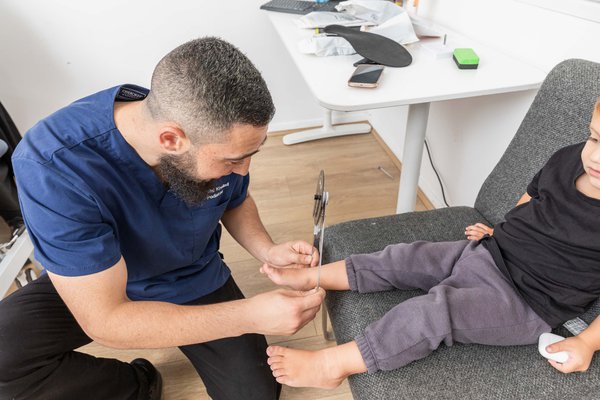
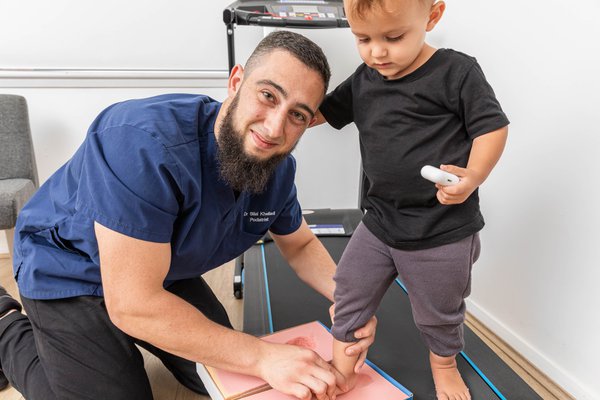
A podiatry assessment considers your child’s growth stage, symptoms, foot posture, walking pattern, activity levels and footwear.
Gait & Walking Analysis
Observes foot and knee position during walking and running.
Rotational Profile
Measures hip, shin and foot rotation to find the source.
Foot Shape Assessment
Checks for metatarsus adductus and foot flexibility.
Development Review
Age, milestones and change over time.
Referral (if needed)
Paediatric orthopaedic referral for stiff, severe or persistent cases.
Orthotic Therapy & Management for In-Toeing
Management is tailored to your child’s age, activity level, foot posture and goals.
How Orthotic Therapy May Help
Orthoses do not correct in-toeing caused by bony rotation, and most children do not need them. Orthotic therapy may be considered when a child with in-toeing also has symptoms related to foot posture, such as foot pain, fatigue during activity or flexible flat feet.
For most families, the key parts of care are accurate assessment, reassurance, monitoring as the child grows, supportive footwear, and encouraging a variety of sitting positions and play.
- Monitoring and reassurance as the main approach
- Orthoses only where related foot symptoms are present
- Well-fitted, lightweight footwear
- Encouraging varied sitting positions and active play
Education & Monitoring
Most in-toeing improves with growth; periodic review may be suggested.
Footwear Planning
Correctly sized, supportive shoes to reduce tripping.
Orthotic Therapy
Only considered where related foot symptoms are present.
Strength & Play
Active play and age-appropriate strengthening.
Sitting Habits
Encouraging varied sitting positions.
Referral
Paediatric orthopaedic review for stiff metatarsus adductus or persistent, severe in-toeing.
Learn more about orthotic therapy, strengthening, stretching and strapping, or view all treatments. Related kids conditions include out-toeing, frequent tripping, flat feet, hypermobile feet, foot fatigue in sport.
When to Seek Assessment
Assessment can help confirm the cause of in-toeing and provide reassurance about what to expect as your child grows.
Please see your GP if in-toeing affects only one side, is worsening, causes pain or limping, is severe after about 8 to 10 years of age, if a baby’s foot curve is stiff, or if there are concerns about development, balance or strength.
In-Toeing in Children – Frequently Asked Questions
Is in-toeing normal?
Yes. In-toeing is common in young children and usually improves naturally with growth.
Do orthotics fix in-toeing?
No. Orthotics, special shoes and braces do not change bony rotation. Orthoses may be considered only when related foot symptoms are present.
Does W-sitting cause in-toeing?
W-sitting is common in children with femoral anteversion. Encouraging a variety of sitting positions is often suggested.
When should in-toeing be assessed?
If it is one-sided, painful, worsening, causing frequent falls, or persisting into later childhood.
Kids Podiatry for In-Toeing in Bankstown
Kid-Friendly Environment
We create a calm, supportive space to help children feel comfortable during assessment.
Orthotic Therapy Options
Where appropriate, prefabricated and custom foot orthoses are discussed based on assessment findings.
Parent-Focused Guidance
We help parents understand what is normal, what may need monitoring, and what can be supported.
Our clinic is located at 1/50 Kitchener Parade, Bankstown, and sees families from across Sydney, including Bankstown, Condell Park, Padstow, Revesby, Lakemba and Belmore. Visit our children’s podiatry page for more kids foot conditions, read about our clinic, or contact the clinic to make an appointment enquiry.
This information is general in nature and is not a substitute for individual assessment and advice. Outcomes vary between children. If you are concerned about your child’s health, please consult your GP or a registered health practitioner.