Recurrent Ankle Sprains in Children
Some children and teenagers roll their ankle repeatedly, especially during sport. Recurrent ankle sprains can be linked with reduced balance, strength and foot posture. This page explains recurrent ankle sprains in kids and how balance training, bracing and orthotic therapy may help.
What Is Recurrent Ankle Sprains in Children?
An ankle sprain happens when the ligaments supporting the ankle are overstretched, most often when the foot rolls inwards (inversion). After an initial sprain, some young people experience repeated sprains or a feeling that the ankle ‘gives way’. This is often called ankle instability.
Contributing factors can include incomplete rehabilitation after a previous sprain, reduced balance and strength, high-arched feet that sit more on the outer edge, ligament laxity, and sports involving jumping and changing direction. For more about acute sprains, see our ankle sprain page.
Management focuses on balance and strength training, with strapping or bracing for sport and, where foot posture contributes, orthotic therapy.
Signs & Symptoms of Recurrent Ankle Sprains in Kids
Children may not always describe symptoms clearly, so parents often notice changes in walking, activity or footwear first. Common signs include:
- Rolling the same ankle more than once
- Ankle feeling weak, wobbly or giving way
- Reduced confidence on uneven ground or in sport
- Ongoing swelling or aching after activity
- Difficulty balancing on one leg
Common Contributing Factors
- Incomplete rehabilitation after a previous sprain
- Reduced balance and ankle strength
- High arches or a foot that rolls outwards
- Joint hypermobility
- Sports involving landing and cutting
- Unsupportive footwear
How Recurrent Ankle Sprains Is Assessed
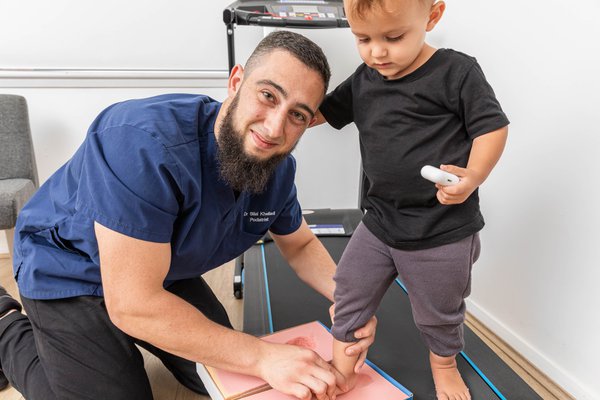
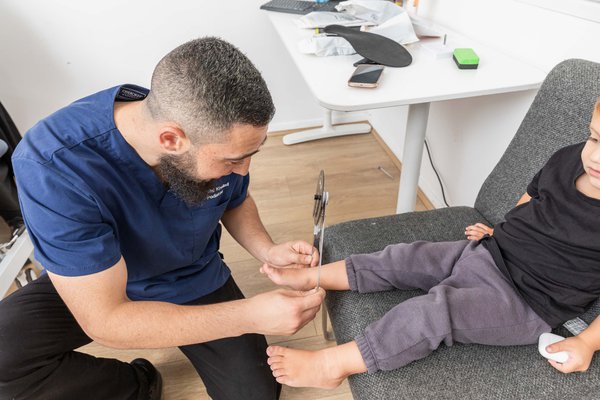
A podiatry assessment considers your child’s growth stage, symptoms, foot posture, walking pattern, activity levels and footwear.
Balance & Stability Testing
Single-leg balance and functional tests.
Ankle Examination
Assesses ligament stability and range of motion.
Foot Posture Assessment
Identifies foot types that may increase rolling.
Sports & Footwear Review
Sport demands, boots and shoes.
Referral (if needed)
Imaging or medical review for suspected fractures or significant injury.
Orthotic Therapy & Management for Recurrent Ankle Sprains
Management is tailored to your child’s age, activity level, foot posture and goals.
How Orthotic Therapy May Help
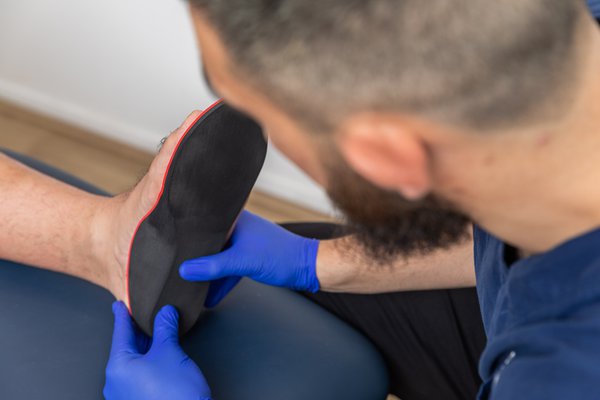
Where foot posture increases the tendency to roll outwards, orthotic therapy may be considered to help position the foot more centrally and improve stability. Orthoses may include features on the outer side to reduce inversion load.
Orthoses are used alongside balance training and, for sport, ankle bracing or strapping, which have good evidence for reducing repeat sprains.
- Custom orthoses with lateral stability features
- Stable sports footwear
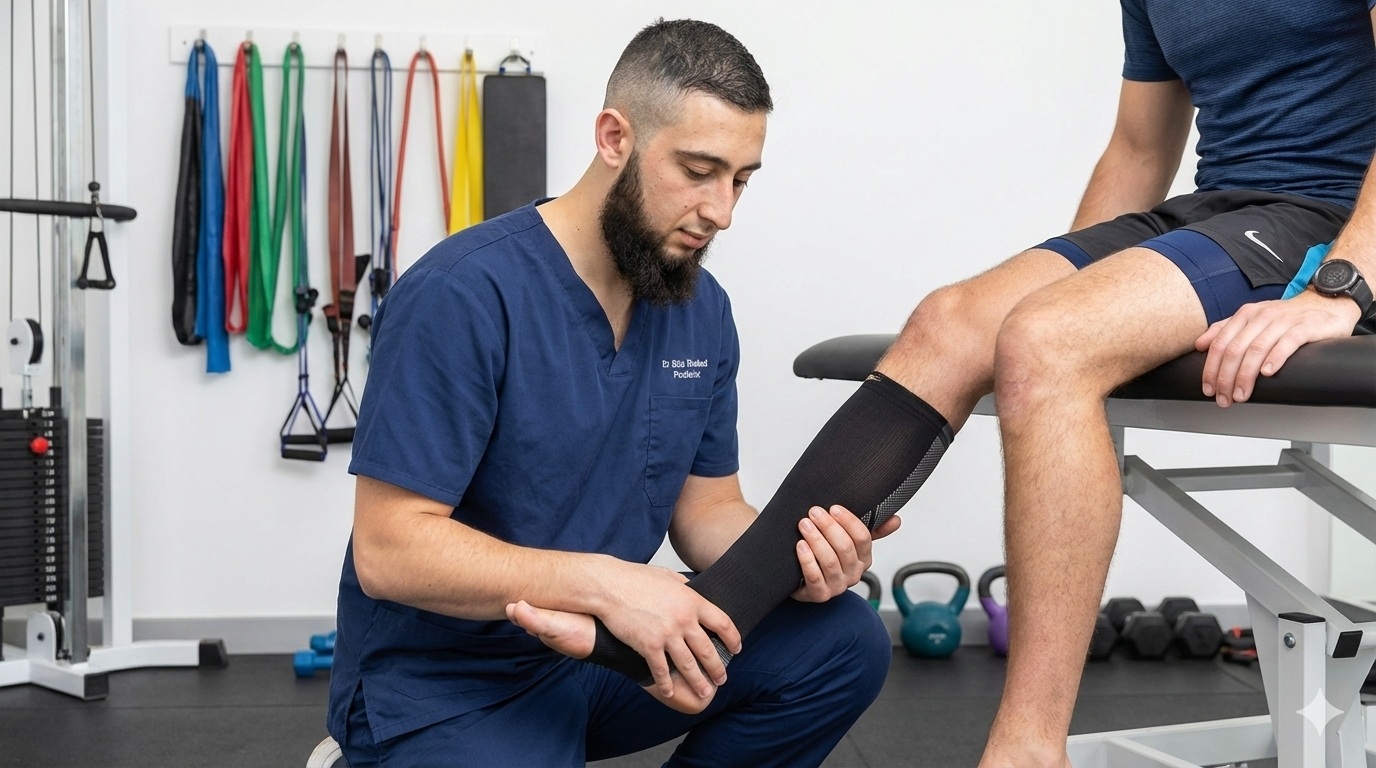
- Ankle bracing or strapping for sport
- Balance and proprioceptive training
Balance & Strength Training
Progressive ankle strengthening and balance work.
Orthotic Therapy
May be considered where foot posture contributes to ankle rolling.
Bracing & Strapping
Strapping or bracing for sport.
Footwear Planning
Stable, well-fitted sports shoes and boots.
Foot Mobilisations
Joint mobilisation may be discussed where stiffness is present.
Graded Return to Sport
Sport-specific drills before full return.
Learn more about orthotic therapy, strengthening, stretching and strapping, or view all treatments. Related kids conditions include high arches, hypermobile feet, foot apophysitis, tibialis posterior strain, foot fatigue in sport.
When to Seek Assessment
Assessment after a first sprain, or when sprains start to repeat, can help build a rehabilitation plan.
Please seek medical care if your child cannot bear weight after an injury, if there is tenderness over the ankle or foot bones, significant swelling or bruising, or if pain does not improve, as a fracture may need to be ruled out.
Recurrent Ankle Sprains in Children – Frequently Asked Questions
Why does my child keep rolling their ankle?
Repeat sprains are often linked to incomplete rehabilitation, reduced balance and strength, foot posture or sports demands.
Can orthotics help weak ankles?
Where foot posture contributes, orthoses may help improve stability, particularly when combined with balance training.
Should my child wear an ankle brace?
Bracing or strapping during sport may be recommended while strength and balance improve.
Can children get growth plate injuries instead of sprains?
Yes. In children, ankle injuries can affect growth plates, so significant injuries should be assessed medically.
Kids Podiatry for Recurrent Ankle Sprains in Bankstown
Kid-Friendly Environment
We create a calm, supportive space to help children feel comfortable during assessment.
Orthotic Therapy Options
Where appropriate, prefabricated and custom foot orthoses are discussed based on assessment findings.
Parent-Focused Guidance
We help parents understand what is normal, what may need monitoring, and what can be supported.
Our clinic is located at 1/50 Kitchener Parade, Bankstown, and sees families from across Sydney, including Bankstown, Condell Park, Padstow, Revesby, Lakemba and Belmore. Visit our children’s podiatry page for more kids foot conditions, read about our clinic, or contact the clinic to make an appointment enquiry.
This information is general in nature and is not a substitute for individual assessment and advice. Outcomes vary between children. If you are concerned about your child’s health, please consult your GP or a registered health practitioner.