Out-Toeing in Children (Duck Walking)
Out-toeing, sometimes called ‘duck walking’, is when the feet point outwards during walking or running. It is common in babies and toddlers and often improves with time. This page explains the causes of out-toeing, important warning signs, and how podiatry care and orthotic therapy may help when flat feet contribute.
What Is Out-Toeing in Children?
Out-toeing describes feet that turn outwards when walking. It is common in infants and new walkers, often due to tightness around the hips from positioning in the womb, and usually improves within the first couple of years of walking.
In older children, out-toeing may relate to an outward twist of the shin bone (external tibial torsion), the thigh bone (femoral retroversion), or foot posture, particularly flat feet and hypermobile feet, where the foot rolls inwards and turns outwards.
When out-toeing is linked to flat feet and symptoms such as arch pain, fatigue or tripping, orthotic therapy and footwear advice may help. Orthoses do not change bony rotation, so management focuses on comfort, function and monitoring.
Signs & Symptoms of Out-Toeing in Kids
Children may not always describe symptoms clearly, so parents often notice changes in walking, activity or footwear first. Common signs include:
- Feet pointing outwards when walking or running
- A waddling or ‘duck-like’ walking pattern
- Flat-looking feet with ankles rolling inwards
- Tiring quickly or aching feet after activity
- Shoes wearing on the inner side
Common Contributing Factors
- Hip tightness in infants (usually improves with walking)
- External tibial torsion (shin bone twist)
- Femoral retroversion (thigh bone twist)
- Flat feet and hypermobility
- Less commonly, hip conditions that need urgent medical assessment
How Out-Toeing Is Assessed
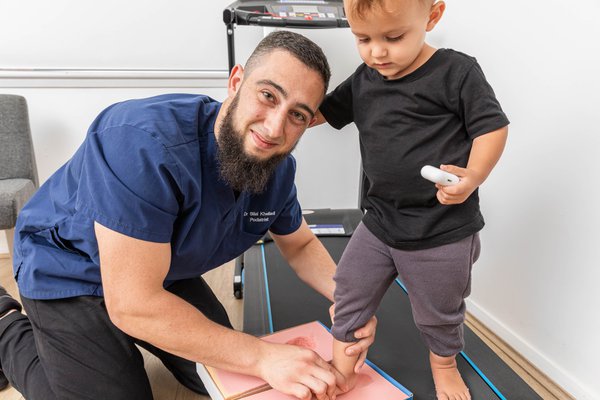
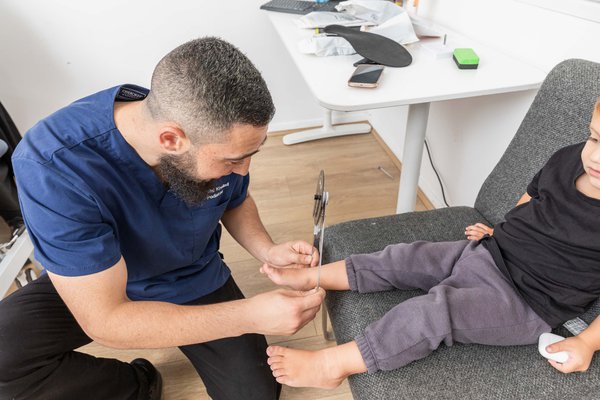
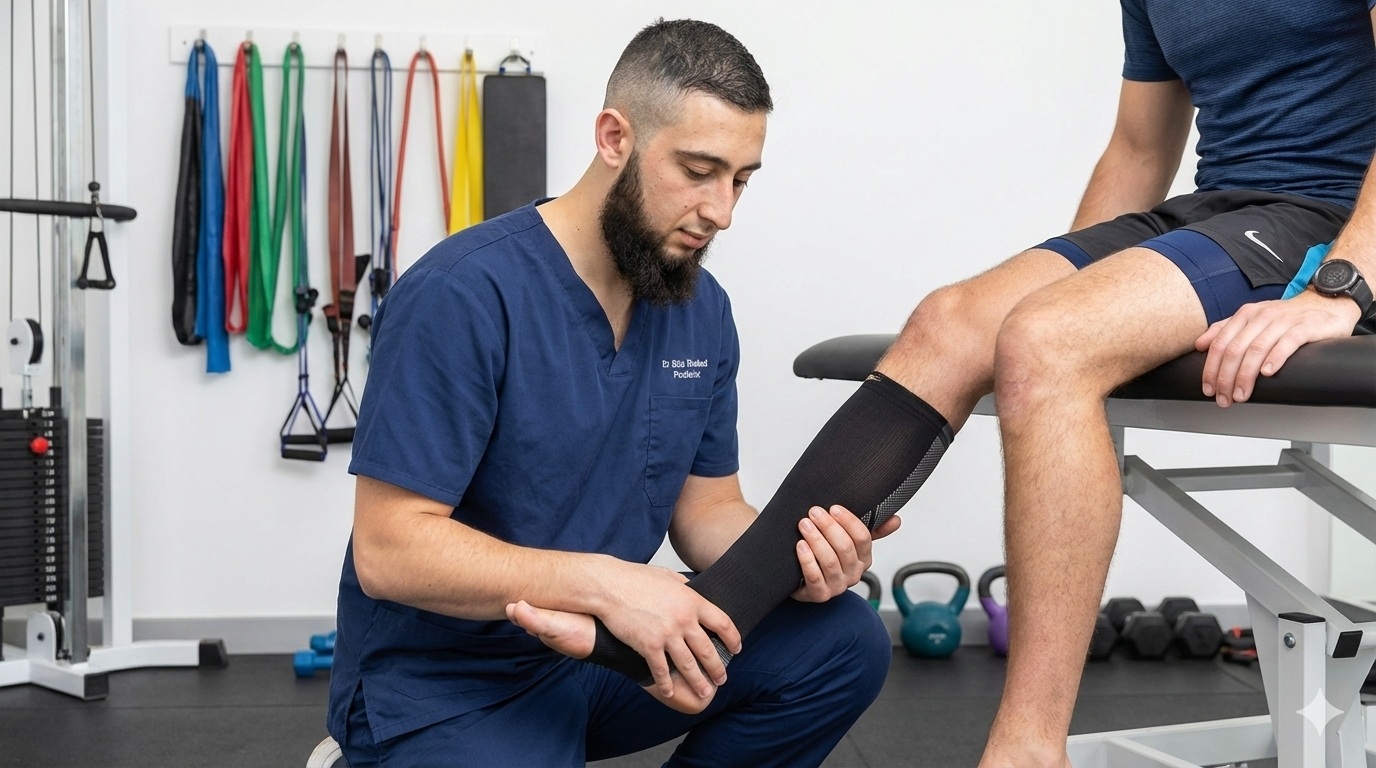
A podiatry assessment considers your child’s growth stage, symptoms, foot posture, walking pattern, activity levels and footwear.
Gait & Walking Analysis
Observes foot, knee and hip position during movement.
Rotational Profile
Measures hip, shin and foot rotation.
Foot Posture Assessment
Checks for flat or hypermobile feet.
Development Review
Age, milestones and change over time.
Referral (if needed)
GP or paediatric orthopaedic review when indicated.
Orthotic Therapy & Management for Out-Toeing
Management is tailored to your child’s age, activity level, foot posture and goals.
How Orthotic Therapy May Help
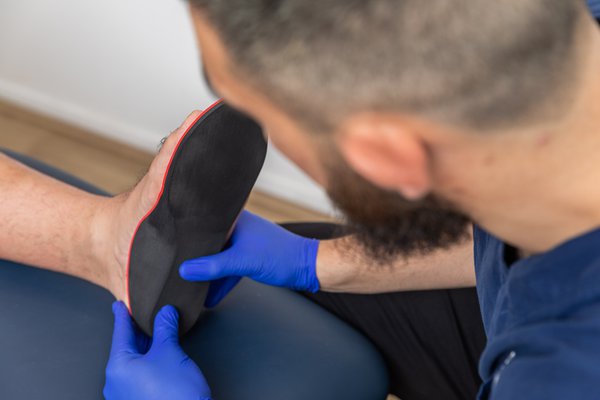
Where out-toeing is associated with flat feet and symptoms, orthotic therapy may be considered to support the arch, reduce inward rolling and improve comfort during walking and sport.
Orthoses do not change the rotation of the shin or thigh bones. They are used together with supportive footwear, strengthening and monitoring as your child grows.
- Supportive orthoses where flat feet contribute
- Footwear with a firm heel counter
- Foot and hip strengthening
- Monitoring over time
Orthotic Therapy
May be considered where flat feet contribute to symptoms.
Education & Monitoring
Many children improve with growth.
Strengthening Programs
Footwear Planning
Supportive shoes for school and sport.
Stretching
Stretching for tight hip or calf muscles where present.
Referral
Medical review when warning signs are present.
Learn more about orthotic therapy, strengthening, stretching and strapping, or view all treatments. Related kids conditions include in-toeing, flat feet, hypermobile feet, frequent tripping, foot fatigue in sport.
When to Seek Assessment
An assessment can help identify the cause of out-toeing and whether foot posture is contributing to symptoms.
Important: in older children and teenagers, new out-toeing with hip, groin, thigh or knee pain and a limp can be a sign of a hip problem called slipped capital femoral epiphysis (SCFE). This needs prompt medical assessment. Please also see your GP if out-toeing is one-sided, worsening, painful, or occurs with developmental concerns.
Out-Toeing in Children – Frequently Asked Questions
Is out-toeing normal in toddlers?
Yes. Out-toeing is common in babies and new walkers and often improves within the first couple of years of walking.
Can orthotics fix out-toeing?
Orthotics do not change bony rotation, but may help when out-toeing is associated with flat feet and symptoms.
Is out-toeing linked to flat feet?
Often. Flat and hypermobile feet can roll inwards and turn outwards, contributing to out-toeing.
When is out-toeing urgent?
New out-toeing with hip, thigh or knee pain and a limp in an older child or teenager should be assessed by a doctor promptly.
Kids Podiatry for Out-Toeing in Bankstown
Kid-Friendly Environment
We create a calm, supportive space to help children feel comfortable during assessment.
Orthotic Therapy Options
Where appropriate, prefabricated and custom foot orthoses are discussed based on assessment findings.
Parent-Focused Guidance
We help parents understand what is normal, what may need monitoring, and what can be supported.
Our clinic is located at 1/50 Kitchener Parade, Bankstown, and sees families from across Sydney, including Bankstown, Condell Park, Padstow, Revesby, Lakemba and Belmore. Visit our children’s podiatry page for more kids foot conditions, read about our clinic, or contact the clinic to make an appointment enquiry.
This information is general in nature and is not a substitute for individual assessment and advice. Outcomes vary between children. If you are concerned about your child’s health, please consult your GP or a registered health practitioner.