Plantar Warts in Children (Painful Lesions & Offloading)
Plantar warts (verrucae) are common in children and are caused by a virus that infects the skin on the sole of the foot. Many cause no pain, but warts on weight-bearing areas can be painful when walking. This page explains plantar warts in children and how offloading and treatment options may help.
What Is Plantar Warts in Children?
Plantar warts are caused by the human papillomavirus (HPV), which enters through small breaks in the skin. They are common in school-aged children, particularly those who use shared change rooms and pools. Warts often have a rough surface with small black dots and may be covered by hard skin.
Many warts in children resolve on their own over months to a couple of years as the immune system responds. However, warts on the heel or ball of the foot can be painful when standing and walking, particularly when covered by callus. For general information, see our plantar wart page.
When warts are painful, podiatry care can focus on reducing pressure through debridement (gentle removal of overlying hard skin), deflective padding and, where needed, offloading insoles or orthotic therapy. Treatment options to target the wart itself can also be discussed.
Signs & Symptoms of Plantar Warts in Kids
Children may not always describe symptoms clearly, so parents often notice changes in walking, activity or footwear first. Common signs include:
- A rough, thickened lesion on the sole of the foot
- Small black dots in the lesion (tiny blood vessels)
- Pain when squeezing the lesion side to side
- Pain walking or running if on the heel or ball of the foot
- Clusters of warts (mosaic warts)
Common Contributing Factors
- Human papillomavirus (HPV) infection of the skin
- Walking barefoot in shared areas (pools, change rooms)
- Small cuts or cracks in the skin
- Moist or sweaty feet
- High-pressure areas on the foot, sometimes linked to high arches
How Plantar Warts Is Assessed
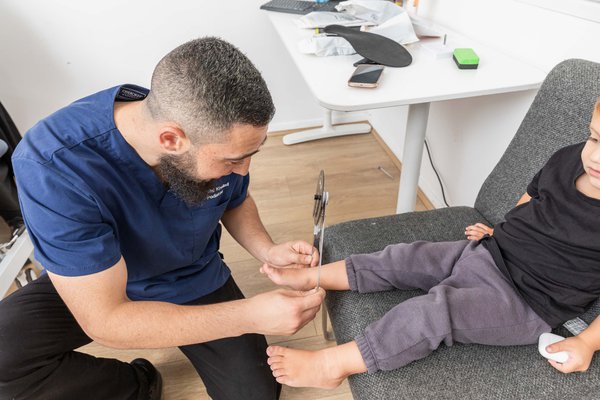
A podiatry assessment considers your child’s growth stage, symptoms, foot posture, walking pattern, activity levels and footwear.
Lesion Assessment
Confirms the lesion is likely a wart rather than a corn or callus.
Pressure Assessment
Identifies high-load areas contributing to pain.
Activity & Footwear Review
Sport, swimming and footwear.
Health History
Considers any conditions that affect treatment choice.
Referral (if needed)
If the lesion looks unusual, bleeds or changes quickly.
Orthotic Therapy & Management for Plantar Warts
Management is tailored to your child’s age, activity level, foot posture and goals.
How Orthotic Therapy May Help
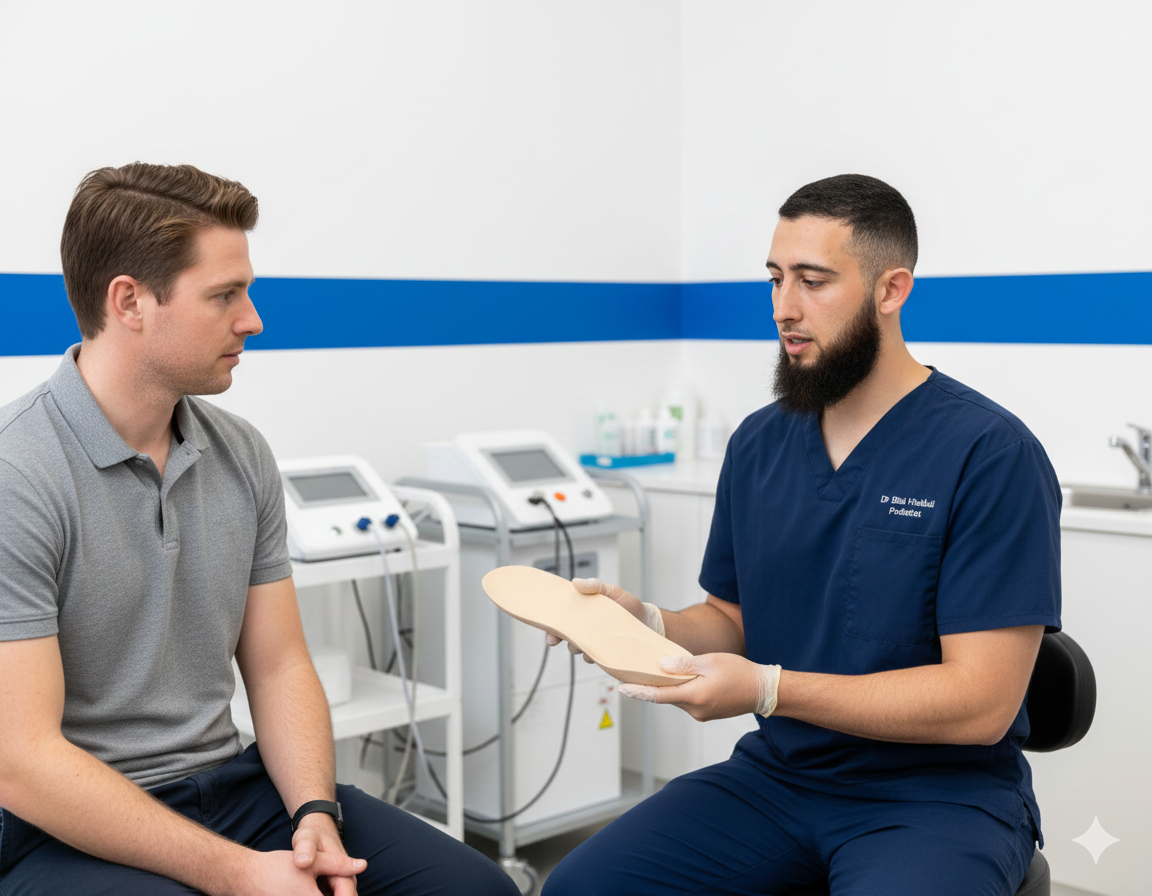
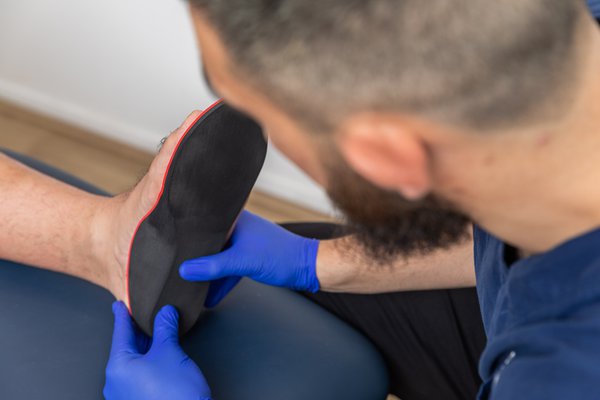
For painful warts on weight-bearing areas, offloading can reduce pain during walking and sport. Options may include deflective padding with an aperture around the wart, cushioned insoles, or orthotic therapy with an accommodation to reduce pressure on the lesion.
Offloading is often combined with debridement and, where appropriate, treatments that target the wart. Treatment choice depends on your child’s age, comfort, the number and location of warts, and family preference.
- Deflective padding around the wart
- Cushioned or accommodative insoles
- Orthoses with a pressure-relief area where needed
- Supportive, cushioned footwear
Offloading & Orthotic Devices
May reduce pressure and pain when walking.
Debridement
Gentle removal of overlying hard skin to reduce pressure.
Wart Treatment Options
Options such as topical treatments may be discussed.
Monitoring
Many warts in children resolve over time.
Footwear Planning
Cushioned shoes for school and sport.
Prevention Advice
Thongs in shared showers, not sharing towels and keeping feet dry.
Learn more about orthotic therapy, strengthening, stretching and strapping, or view all treatments. Related kids conditions include overlapping toes, hammer toes, sesamoid pain, high arches, plantar heel pain.
When to Seek Assessment
Assessment may help if a wart is painful, spreading, affecting sport, or if you are unsure whether a lesion is a wart.
Please see your GP if a lesion bleeds without injury, changes colour or shape quickly, looks unusual, or if there are signs of infection. Children with diabetes or immune conditions should seek advice before using over-the-counter wart treatments.
Plantar Warts in Children – Frequently Asked Questions
Do plantar warts go away on their own in children?
Many do resolve with time, although this can take months to a couple of years.
Why are plantar warts painful?
Warts on weight-bearing areas are pressed into the skin when walking, and callus over the wart adds pressure.
How can offloading help a wart?
Padding and insoles can shift pressure away from the wart, making walking and sport more comfortable.
Are plantar warts contagious?
Yes, they can spread through direct contact and shared wet surfaces. Wearing thongs in change rooms can help.
Kids Podiatry for Plantar Warts in Bankstown
Kid-Friendly Environment
We create a calm, supportive space to help children feel comfortable during assessment.
Orthotic Therapy Options
Where appropriate, prefabricated and custom foot orthoses are discussed based on assessment findings.
Parent-Focused Guidance
We help parents understand what is normal, what may need monitoring, and what can be supported.
Our clinic is located at 1/50 Kitchener Parade, Bankstown, and sees families from across Sydney, including Bankstown, Condell Park, Padstow, Revesby, Lakemba and Belmore. Visit our children’s podiatry page for more kids foot conditions, read about our clinic, or contact the clinic to make an appointment enquiry.
This information is general in nature and is not a substitute for individual assessment and advice. Outcomes vary between children. If you are concerned about your child’s health, please consult your GP or a registered health practitioner.
.png)