Children’s Podiatry
Growing feet need special care. Children often experience foot and ankle conditions related to growth, activity, sports participation and footwear. This page provides general information about common children’s podiatry concerns and outlines management options.
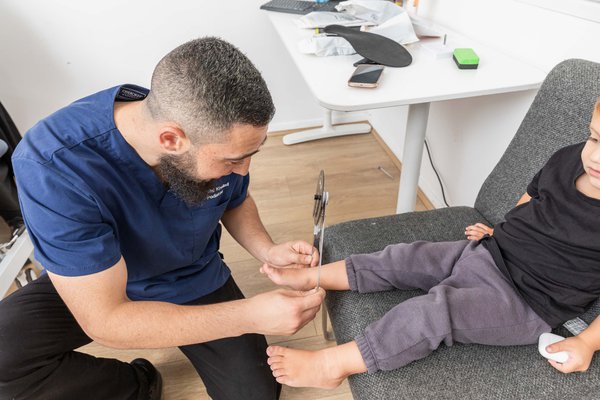
Children’s Foot & Ankle Health
Children’s feet grow rapidly, and their bones, muscles and tendons develop at different rates. This can lead to temporary imbalances, discomfort or movement changes. Many childhood foot conditions are related to growth, activity levels, sports participation or footwear.
Common concerns include Sever’s disease, flat feet, in-toeing, growing pains, toe walking, ingrown toenails, sports injuries, heel pain, ankle sprains and forefoot pain. Early assessment helps identify contributing factors and discuss management options tailored to your child’s age, activity level and goals.
Children often respond well to orthotic therapy, strengthening, stretching, footwear changes and load modification.
Common Children’s Podiatry Conditions
Below are common foot and ankle conditions seen in children.
Foot Posture & Walking
- Flat feet (pes planus) – flat feet and low arches in growing children. (learn more)
- High arches (pes cavus) – high-arched feet and associated pain in kids. (learn more)
- Hypermobile feet – flexible, hypermobile feet and fatigue in kids. (learn more)
- Frequent tripping – clumsiness and falls while walking or running. (learn more)
- Foot fatigue during sport – tired, aching feet during sport and play. (learn more)
- In-toeing (pigeon toed) – feet turning inwards when walking. (learn more)
- Out-toeing (duck walking) – feet turning outwards when walking. (learn more)
Heel, Growth & Forefoot Pain
- Sever’s disease – growth-related heel pain in active kids. (learn more)
- Apophysitis of the foot – growth-plate irritation, incl. Iselin’s disease. (learn more)
- Plantar heel pain – pain under the heel in children and teens. (learn more)
- Sesamoid pain – ball-of-foot pain under the big toe. (learn more)
- Growing pains – evening leg aches in young children. (learn more)
Knee, Leg & Ankle
- Shin splints (MTSS) – shin pain in young runners and athletes. (learn more)
- Osgood-Schlatter disease – growth-related knee pain below the kneecap. (learn more)
- Patellofemoral pain – front-of-knee pain in active teens. (learn more)
- Recurrent ankle sprains – repeated ankle rolling and instability. (learn more)
- Tibialis posterior strain – inner ankle and arch pain in active kids. (learn more)
Toes & Skin
- Overlapping toes – pressure and rubbing from overlapping toes. (learn more)
- Hammer toes (children) – bent, clawed or curly toes in kids. (learn more)
- Plantar warts – painful warts on the sole needing offloading. (learn more)
Other Children’s Foot Concerns
- Toe walking – common in early childhood; may require monitoring
- Ingrown toenails – often caused by nail shape or footwear (learn more)
- Sports injuries – including ankle sprains, heel pain and forefoot overload (learn more)
Many of these conditions respond well to orthotic therapy, especially when foot posture or load distribution contributes to symptoms.
How Children’s Foot Conditions Are Assessed
Assessment focuses on growth stage, movement patterns, foot posture and activity levels.
Growth & Development Review
Assesses age-related changes in bones, muscles and tendons.
Gait & Walking Analysis
Reviews walking patterns, foot posture and balance.
Activity & Sports Load Review
Considers training volume, surfaces and footwear.
Footwear Assessment
Evaluates school shoes, sports shoes and casual footwear.
Referral (if needed)
Considered only when further medical input is required.
Management Options
Management is tailored to your child’s age, activity level, foot posture and goals.
Orthotic Therapy
May be considered to support growing feet, improve alignment and reduce overload.
Strengthening Programs
Targets foot, ankle and lower‑limb stability.
Stretching Programs
May be discussed to improve flexibility and reduce tension on growing structures.
Footwear Planning
Guidance on school shoes, sports shoes and supportive casual footwear.
Load Management
Adjusting activity levels to support recovery and reduce discomfort.
Education & Monitoring
Helping parents understand growth-related changes and when to monitor symptoms.
Children’s foot conditions often respond well to orthotic therapy, especially when foot posture contributes to overload. Orthotics may be considered for Sever’s disease, flat feet, heel pain, ankle instability and forefoot discomfort.
Considering Early Assessment
Children’s foot and ankle concerns can progress if activity levels increase or footwear remains unsupportive. Early assessment helps identify growth‑related factors, movement patterns and load issues that may contribute to discomfort or reduced confidence in sport.
If your child also experiences heel pain, ankle sprains, ingrown toenails or plantar warts, these may be discussed during a consultation to provide a complete picture of their foot health.
Why Choose Our Clinic for Children’s Podiatry?
Kid-Friendly Environment
We create a calm, supportive space to help children feel comfortable during assessment.
Evidence-Informed Care
Management options are discussed using current clinical knowledge and growth-related considerations.
Parent-Focused Guidance
We help parents understand what is normal, what may need monitoring, and what can be supported.
For more information about related conditions, visit: Sever’s disease, ingrown toenails, heel pain, ankle sprains, or explore all conditions.
.png)