Sever’s Disease in Kids (Calcaneal Apophysitis)
Sever’s disease is one of the most common causes of heel pain in active, growing children. It relates to irritation of the growth plate at the back of the heel. This page explains the signs of Sever’s disease and how heel raises, orthotic therapy and activity changes may help your child stay active.
.png)
What Is Sever’s Disease in Children?
Sever’s disease (calcaneal apophysitis) is irritation of the growth plate (apophysis) at the back of the heel bone, where the Achilles tendon attaches. It most commonly affects children aged around 8 to 14 who are active in running and jumping sports.
Despite the name, Sever’s disease is not a disease. It is a common, self-limiting condition that usually settles once the growth plate matures. Management aims to reduce pain and help your child keep participating in activity. For more background, see our main Sever’s disease page and our page on apophysitis of the foot.
Sever’s disease is a frequent cause of heel pain in children, and it can occur alongside flat feet, tight calf muscles and periods of rapid growth.
Signs & Symptoms of Sever’s Disease in Kids
Children may not always describe symptoms clearly, so parents often notice changes in walking, activity or footwear first. Common signs include:
- Pain at the back or sides of the heel during or after sport
- Limping or walking on tiptoes after activity
- Pain when the sides of the heel are squeezed
- Heel pain first thing in the morning or after rest
- Symptoms that increase at the start of a sports season or during growth spurts
Common Contributing Factors
- Repetitive running and jumping (e.g. football, netball, basketball, athletics)
- Rapid growth with tight calf muscles
- Hard playing surfaces and worn or unsupportive footwear
- Foot posture factors such as flat feet or high arches
- Increases in training load
How Sever’s Disease Is Assessed
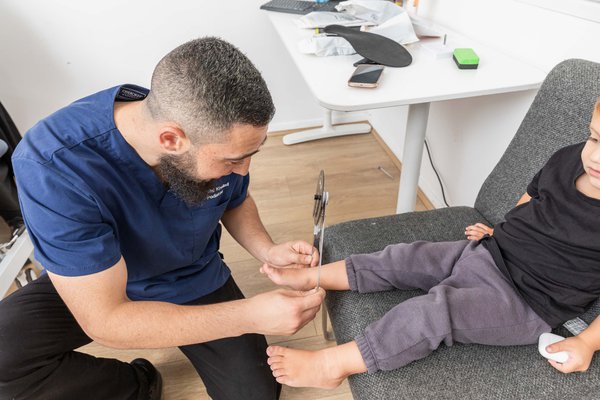
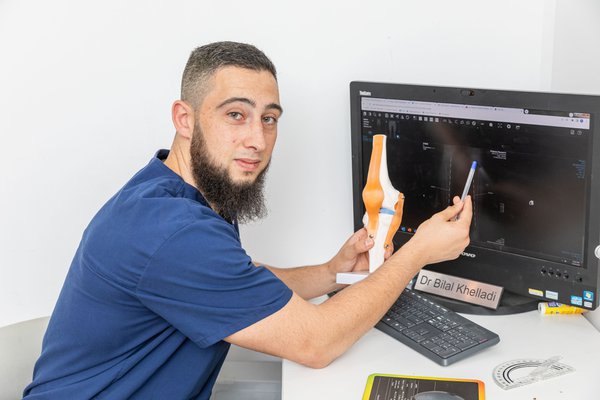
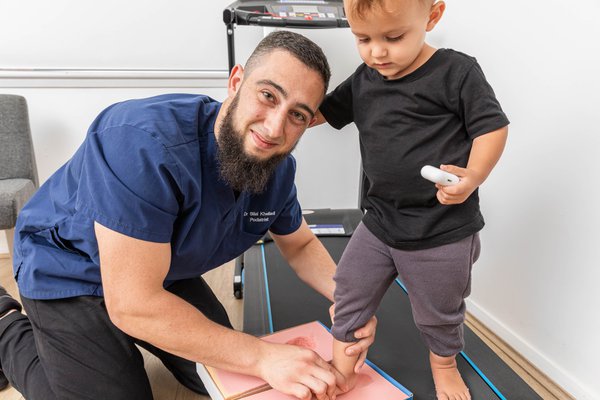
A podiatry assessment considers your child’s growth stage, symptoms, foot posture, walking pattern, activity levels and footwear.
Growth & Development Review
Considers age, growth stage and activity levels.
Heel Examination
Clinical tests such as the heel squeeze test.
Gait & Foot Posture
Reviews foot posture and walking and running patterns.
Sports Load Review
Training volume, surfaces and footwear.
Referral (if needed)
Imaging or medical review if features are unusual.
Orthotic Therapy & Management for Sever’s Disease
Management is tailored to your child’s age, activity level, foot posture and goals.
How Orthotic Therapy May Help
Research in children with Sever’s disease has found that both heel raises and foot orthoses can help reduce heel pain compared with no intervention. Orthotic therapy and heel raises aim to reduce tension from the Achilles tendon on the growth plate and cushion the heel during impact.
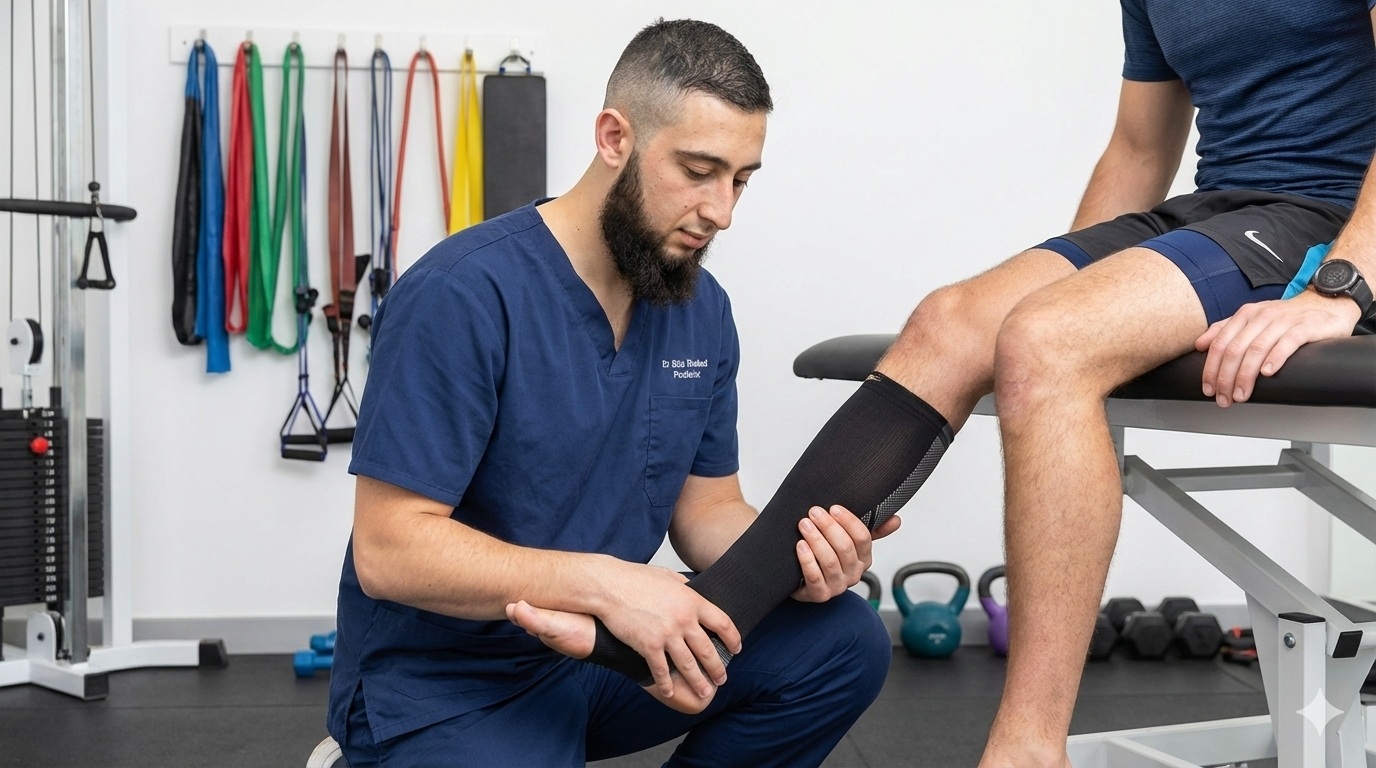
Depending on your child’s foot posture, sport and footwear, options may include cushioned heel raises, prefabricated orthoses or custom foot orthoses. These are often combined with changes to training load and calf flexibility work.
- Cushioned heel raises or heel cups
- Prefabricated or custom foot orthoses
- Sport-specific footwear advice (including boots)
- Review during growth spurts
Orthotic Therapy & Heel Raises
May help reduce load on the heel growth plate and improve comfort.
Load Management
Adjusting training and game time while symptoms settle.
Stretching Programs
Calf stretching where tightness is present.
Strengthening Programs
Calf and foot strengthening as pain allows.
Footwear Planning
Cushioned, supportive sports shoes and boots.
Strapping & Ice
Short-term strapping and icing after sport may be discussed.
Learn more about orthotic therapy, strengthening, stretching and strapping, or view all treatments. Related kids conditions include foot apophysitis, plantar heel pain, flat feet, Osgood-Schlatter Disease, foot fatigue in sport.
When to Seek Assessment
Early assessment can help your child manage symptoms and stay involved in sport with fewer interruptions.
Please see your GP if heel pain occurs at night or at rest, if there is swelling, redness or fever, if pain follows a specific injury, or if your child cannot bear weight.
Sever’s Disease in Children – Frequently Asked Questions
How long does Sever’s disease last?
Symptoms can come and go over months, often during growth spurts or busy sports seasons. It usually resolves once the heel growth plate matures.
Do orthotics help Sever’s disease?
Research suggests heel raises and foot orthoses can both help reduce heel pain in children with Sever’s disease.
Does my child need to stop sport?
Complete rest is not always needed. Modifying training load and using supportive footwear or heel raises may allow continued participation.
What age does Sever’s disease occur?
It is most common between about 8 and 14 years of age, during periods of growth.
Kids Podiatry for Sever’s Disease in Bankstown
Kid-Friendly Environment
We create a calm, supportive space to help children feel comfortable during assessment.
Orthotic Therapy Options
Where appropriate, prefabricated and custom foot orthoses are discussed based on assessment findings.
Parent-Focused Guidance
We help parents understand what is normal, what may need monitoring, and what can be supported.
Our clinic is located at 1/50 Kitchener Parade, Bankstown, and sees families from across Sydney, including Bankstown, Condell Park, Padstow, Revesby, Lakemba and Belmore. Visit our children’s podiatry page for more kids foot conditions, read about our clinic, or contact the clinic to make an appointment enquiry.
This information is general in nature and is not a substitute for individual assessment and advice. Outcomes vary between children. If you are concerned about your child’s health, please consult your GP or a registered health practitioner.