Shin Splints in Kids & Teens (Medial Tibial Stress Syndrome)
Shin splints, or medial tibial stress syndrome (MTSS), cause pain along the inner edge of the shin bone during or after exercise. It is common in teenagers who run and play sport. This page explains shin splints and how orthotic therapy, footwear and load management may help.
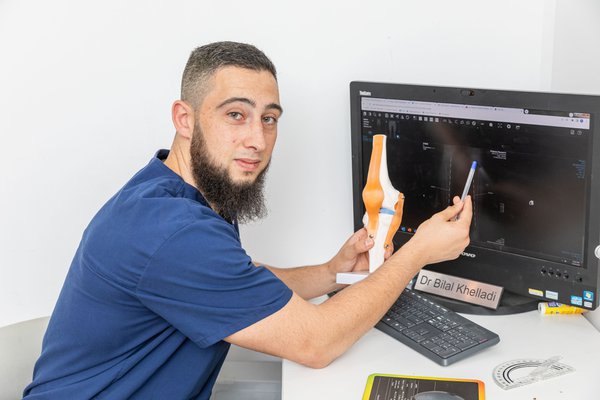
What Is Shin Splints in Children?
Medial tibial stress syndrome is exercise-related pain along the inner (medial) border of the shin bone (tibia). It is thought to relate to repetitive loading of the bone and surrounding tissues when activity increases faster than the body can adapt.
Shin splints are common in adolescents involved in running, football, basketball, netball, athletics and dance. Contributing factors can include sudden increases in training, hard surfaces, footwear and foot posture, such as flat feet.
It is important to distinguish shin splints from a tibial stress fracture, which causes more focused pain. Management often includes load changes, footwear advice, strengthening and, where foot mechanics contribute, orthotic therapy. See also our sports conditions page.
Signs & Symptoms of Shin Splints in Kids
Children may not always describe symptoms clearly, so parents often notice changes in walking, activity or footwear first. Common signs include:
- Pain along the inner edge of the lower shin during or after exercise
- Diffuse tenderness along several centimetres of the shin
- Pain that eases with rest early on but may persist as it progresses
- Pain at the start of exercise that may settle, then return afterwards
Common Contributing Factors
- Sudden increases in running or training load
- Hard training surfaces
- Worn or unsupportive footwear
- Foot posture such as flat feet or excessive pronation
- Reduced calf and hip strength
- Previous shin pain
How Shin Splints Is Assessed
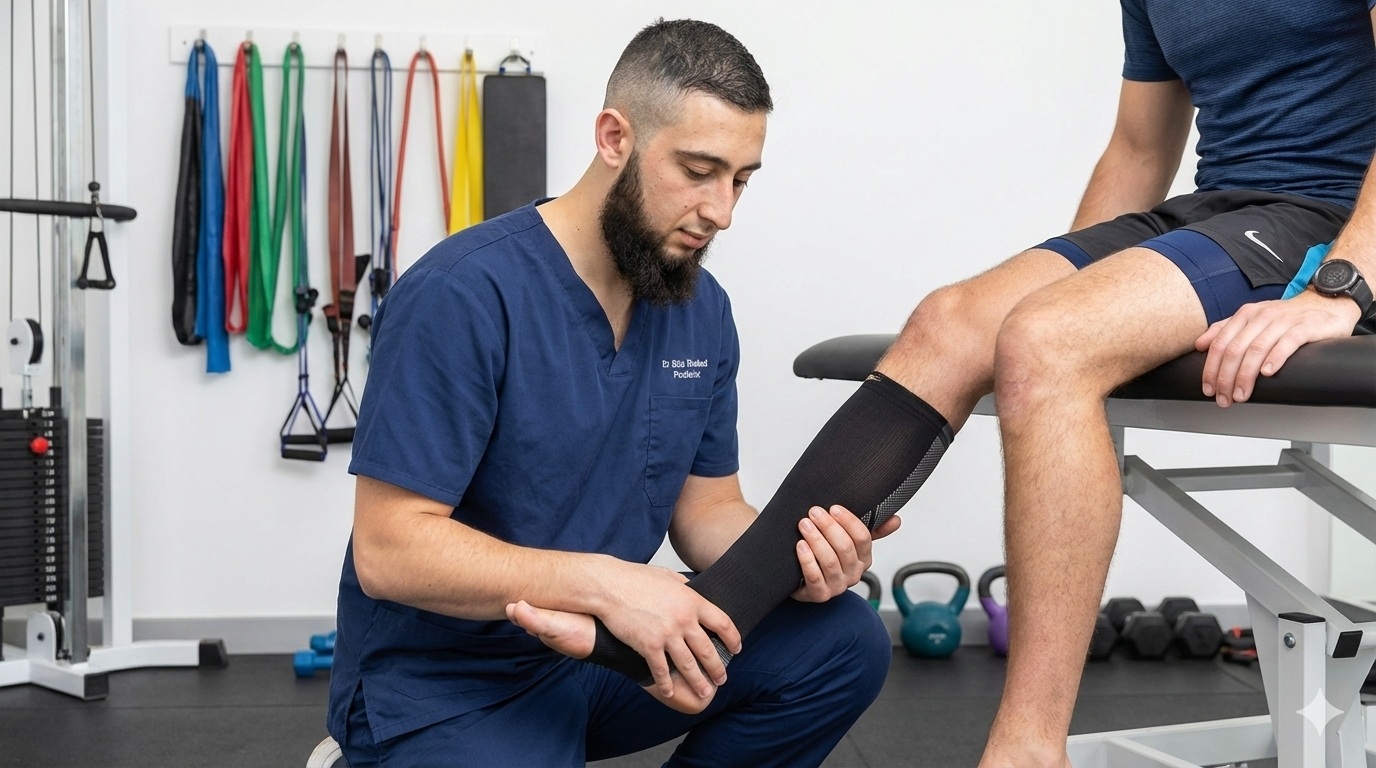
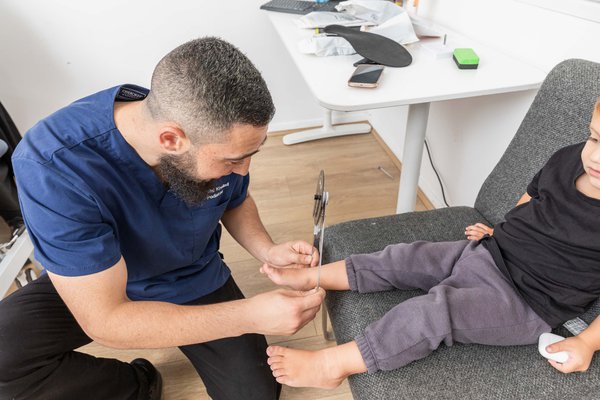
A podiatry assessment considers your child’s growth stage, symptoms, foot posture, walking pattern, activity levels and footwear.
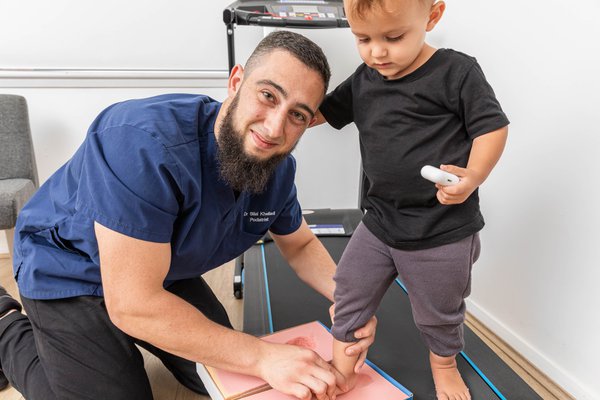
Running & Gait Analysis
Reviews running mechanics and foot posture.
Clinical Examination
Checks the pattern of tenderness along the shin.
Training Load Review
Sport, training volume, surfaces and recent changes.
Footwear Assessment
Running shoes, boots and wear patterns.
Referral for Imaging (if needed)
If a stress fracture is suspected.
Orthotic Therapy & Management for Shin Splints
Management is tailored to your child’s age, activity level, foot posture and goals.
How Orthotic Therapy May Help
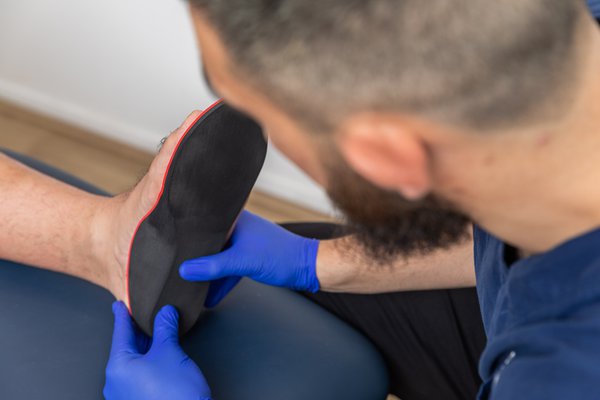
Where foot posture is thought to contribute, orthotic therapy may be considered to reduce excessive pronation and help distribute load more evenly through the lower leg. Some research, mainly in adults and military populations, suggests foot orthoses may help reduce the risk of shin pain in certain groups.
Orthoses are most effective when combined with a gradual training progression, suitable footwear and strengthening.
- Prefabricated or custom foot orthoses
- Running and sports footwear advice
- Shock-absorbing insoles where appropriate
- Review as training loads change
Orthotic Therapy
May be considered where foot mechanics increase shin loading.
Load Management
Reducing and then gradually rebuilding running load.
Strengthening Programs
Footwear Planning
Sport-specific footwear with appropriate support.
Soft Tissue Therapy
Soft tissue therapy for teenagers where appropriate.
Graded Return to Sport
Structured progression back to full training.
Learn more about orthotic therapy, strengthening, stretching and strapping, or view all treatments. Related kids conditions include foot fatigue in sport, flat feet, tibialis posterior strain, Osgood-Schlatter Disease, patellofemoral pain.
When to Seek Assessment
Early changes to training load and footwear can help settle shin pain and reduce time away from sport.
Please seek medical review if pain is focused on one small spot, is present at rest or at night, causes limping, or does not settle, as a stress fracture may need to be ruled out.
Shin Splints in Children – Frequently Asked Questions
What are shin splints?
Shin splints (medial tibial stress syndrome) are exercise-related pain along the inner edge of the shin bone.
Can orthotics help shin splints?
Where foot posture contributes, orthoses may help reduce load through the lower leg as part of a broader management plan.
Should my child stop running?
Usually running is reduced rather than stopped, then gradually increased as symptoms allow.
How is it different from a stress fracture?
Stress fractures usually cause pain in a small, specific spot and may hurt at rest. Imaging may be needed to tell the difference.
Kids Podiatry for Shin Splints in Bankstown
Kid-Friendly Environment
We create a calm, supportive space to help children feel comfortable during assessment.
Orthotic Therapy Options
Where appropriate, prefabricated and custom foot orthoses are discussed based on assessment findings.
Parent-Focused Guidance
We help parents understand what is normal, what may need monitoring, and what can be supported.
Our clinic is located at 1/50 Kitchener Parade, Bankstown, and sees families from across Sydney, including Bankstown, Condell Park, Padstow, Revesby, Lakemba and Belmore. Visit our children’s podiatry page for more kids foot conditions, read about our clinic, or contact the clinic to make an appointment enquiry.
This information is general in nature and is not a substitute for individual assessment and advice. Outcomes vary between children. If you are concerned about your child’s health, please consult your GP or a registered health practitioner.