Growing Pains in Children
Growing pains are aching pains in the legs that commonly affect young children in the late afternoon, evening or night. They are common and not harmful. This page explains typical growing pains, warning signs that need medical review, and how podiatry and orthotic therapy may help some children.
What Is Growing Pains in Children?
Growing pains are recurrent, aching or cramping pains in both legs, usually in the muscles of the calves, shins, thighs or behind the knees. They typically affect children aged around 3 to 12 and occur in the late afternoon, evening or overnight, sometimes waking a child from sleep. By morning, the child is well and walking normally.
Despite the name, there is no clear evidence that growing pains are caused by growth itself. The exact cause is not fully understood; factors such as activity levels during the day, lower pain thresholds and foot posture have been explored.
Some research has found an association between growing pains and flatter foot posture or hypermobility, and a small number of studies suggest foot orthoses may reduce symptoms in some of these children. Podiatrists may therefore consider orthotic therapy alongside massage, stretching and reassurance.
Signs & Symptoms of Growing Pains in Kids
Children may not always describe symptoms clearly, so parents often notice changes in walking, activity or footwear first. Common signs include:
- Aching in both legs, usually in the muscles rather than joints
- Pain in the late afternoon, evening or overnight
- No pain, limp or difficulty walking the next morning
- Pain eased by massage, cuddles or warmth
- Normal activity during the day
Common Contributing Factors
- Exact cause is not fully understood
- More common after very active days
- May be associated with flat feet or hypermobile feet in some children
- Lower pain thresholds in some children
- Family history of growing pains
How Growing Pains Is Assessed
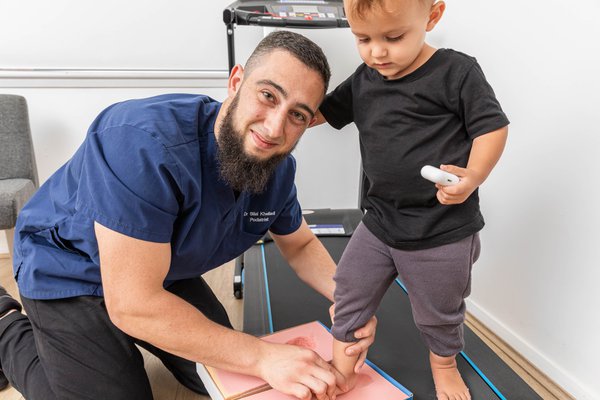
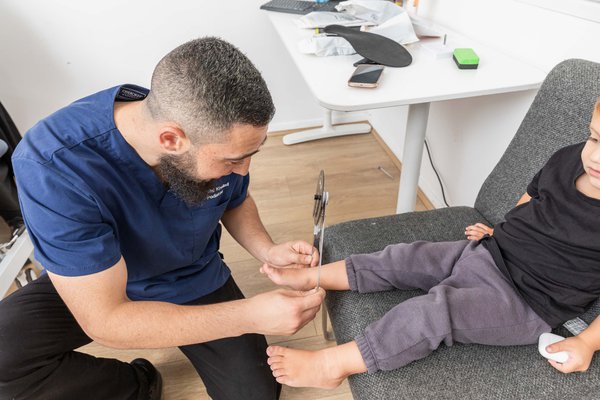
A podiatry assessment considers your child’s growth stage, symptoms, foot posture, walking pattern, activity levels and footwear.
Detailed History
Timing, location and pattern of pain, and general health.
Foot Posture Assessment
Checks for flat or hypermobile feet.
Gait & Movement Review
Ensures walking and joints appear normal.
Activity Review
Daily activity levels and footwear.
Referral (if needed)
GP review for any features not typical of growing pains.
Orthotic Therapy & Management for Growing Pains
Management is tailored to your child’s age, activity level, foot posture and goals.
How Orthotic Therapy May Help
For children with typical growing pains who also have flat or hypermobile feet, orthotic therapy may be considered to support the foot during the day. A small amount of research has reported reduced pain in some children using foot orthoses, although larger studies are needed.
Orthoses are used together with supportive footwear, gentle stretching and evening massage, and are reviewed as your child grows.
- Supportive paediatric orthoses
- Supportive, well-fitted footwear
- Gentle stretching and massage
- Review as your child grows
Education & Reassurance
Understanding that growing pains are common and not harmful.
Orthotic Therapy
May be considered where flat or hypermobile feet are present.
Stretching Programs
Gentle calf and thigh stretching.
Massage & Warmth
Massage and warmth in the evening can ease discomfort.
Footwear Planning
Supportive everyday and school shoes.
Monitoring
Keeping a simple pain diary can be helpful.
Learn more about orthotic therapy, strengthening, stretching and strapping, or view all treatments. Related kids conditions include flat feet, hypermobile feet, foot fatigue in sport, Sever’s Disease, Osgood-Schlatter Disease.
When to Seek Assessment
An assessment may be helpful if growing pains are frequent or disrupt sleep, particularly if your child also has flat feet or tires easily.
Growing pains should not cause a limp, joint swelling or daytime pain. Please see your GP if pain is in one leg only, is in a joint, is present during the day or in the morning, causes limping, or occurs with fever, redness, swelling, weight loss, tiredness, rash, or unexplained bruising.
Growing Pains in Children – Frequently Asked Questions
Are growing pains real?
Yes. Growing pains are a common, recognised cause of leg aches in young children. They are not harmful and usually stop with time.
Can orthotics help growing pains?
Some research suggests foot orthoses may help children with growing pains who also have flat feet, though evidence is limited.
When are growing pains not normal?
Pain in one leg, joint pain, limping, daytime pain, swelling, fever or feeling unwell are not typical and should be assessed by a doctor.
How can I help my child at night?
Massage, warmth and reassurance often help. Your GP can advise on pain relief if needed.
Kids Podiatry for Growing Pains in Bankstown
Kid-Friendly Environment
We create a calm, supportive space to help children feel comfortable during assessment.
Orthotic Therapy Options
Where appropriate, prefabricated and custom foot orthoses are discussed based on assessment findings.
Parent-Focused Guidance
We help parents understand what is normal, what may need monitoring, and what can be supported.
Our clinic is located at 1/50 Kitchener Parade, Bankstown, and sees families from across Sydney, including Bankstown, Condell Park, Padstow, Revesby, Lakemba and Belmore. Visit our children’s podiatry page for more kids foot conditions, read about our clinic, or contact the clinic to make an appointment enquiry.
This information is general in nature and is not a substitute for individual assessment and advice. Outcomes vary between children. If you are concerned about your child’s health, please consult your GP or a registered health practitioner.
.png)