Plantar fasciitis is one of the most common causes of heel pain. Tightness in the calf muscles and the plantar fascia (the thick band of tissue under the arch) is often one of several contributing factors, which is why stretching and soft tissue exercises are commonly included in a management plan.
This page has been put together for patients of our Bankstown clinic, so you have a clear reference for the exercises your podiatrist has shown you. It covers five stretches and three ball rolling techniques. Your podiatrist will let you know which ones suit you, and may adjust the holds and repetitions for your situation.
The exercises at a glance
Before you start
- Stretches should feel like a gentle to moderate pull, not sharp pain.
- Move slowly. Don't bounce into a stretch.
- Do these as advised by your podiatrist, as part of your individual treatment plan.
- Some mild discomfort can be normal, but it should settle within a few hours.
Part 1: Calf and plantar fascia stretches
Stretches 1 and 2 target the two main calf muscles. The gastrocnemius is stretched with the knee straight and the soleus with the knee bent, so doing both covers the whole calf.
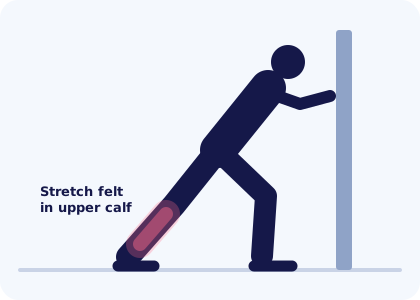
Wall Calf Stretch – Straight Knee
Target: Upper calf (gastrocnemius)
- Stand facing a wall with both hands on it at shoulder height.
- Step one foot back, keeping the back knee straight and the heel flat on the floor.
- Point both feet straight ahead.
- Bend the front knee and lean your hips towards the wall until you feel a stretch in the upper calf of the back leg.
Hold 30 seconds · 3 times each leg · 2–3 times a day
Tip: Keep the back heel down and don't bounce.
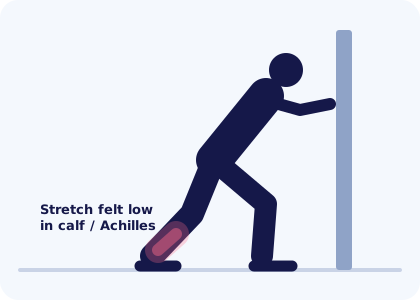
Wall Calf Stretch – Bent Knee
Target: Lower calf & Achilles (soleus)
- Start in the same position as the straight-knee stretch, with the back foot a little closer to the wall.
- Keep the back heel on the floor and slowly bend the back knee.
- Sink down until you feel the stretch lower in the calf, near the Achilles.
Hold 30 seconds · 3 times each leg · 2–3 times a day
Tip: The stretch is usually felt lower down than in exercise 1. This is normal.
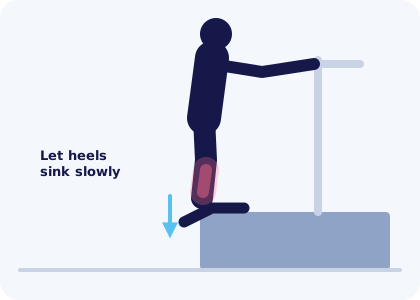
Step Calf Stretch
Target: Whole calf
- Stand on a step with the balls of your feet on the edge. Hold a rail or the wall for balance.
- Slowly let your heels lower below the step until you feel a stretch in the calves.
- Hold, then rise back to level with the step.
Hold 30 seconds · 3 times · 2 times a day
Tip: Always hold on for balance. Use a low step only.
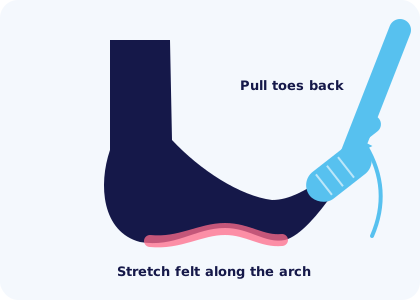
Plantar Fascia Stretch
Target: Arch of the foot (plantar fascia)
- Sit down and cross the affected foot over the opposite knee.
- Hold the base of your toes and pull them back towards your shin.
- Use your other hand to feel the band along the arch. It should feel firm and tight.
- You should feel a stretch through the arch and heel.
Hold 10 seconds · 10 times · 3 times a day
Tip: It helps most before your first steps in the morning and after sitting for a long time.
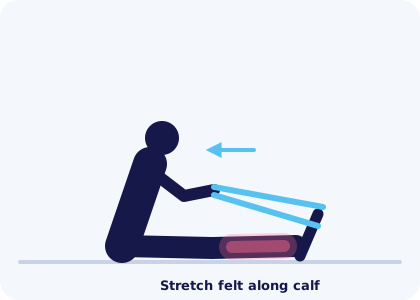
Towel Calf Stretch
Target: Calf and arch
- Sit on the floor or bed with the affected leg straight out in front.
- Loop a towel or band around the ball of your foot.
- Gently pull the towel towards you, keeping the knee straight, until you feel a stretch along the calf.
Hold 30 seconds · 3 times · Morning & evening
Tip: A good one to do in bed before getting up.
Part 2: Ball rolling techniques
Rolling is a simple self-massage technique for the arch and calf. Use a gentle to moderate pressure. Harder is not better, and rolling should not be painful.
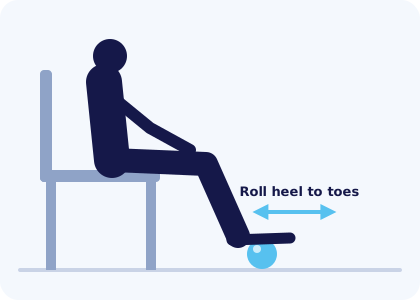
Massage Ball Arch Roll
Target: Arch of the foot
- Sit on a chair with a massage ball (a spiky ball, tennis ball or golf ball) under your foot.
- Slowly roll the ball from the front of the heel to the ball of the foot.
- Use firm but comfortable pressure, and pause on tight spots for a few seconds.
1–2 minutes each foot · 1–2 times a day
Tip: Avoid pressing hard on the most painful point of the heel. Sit, don't stand.
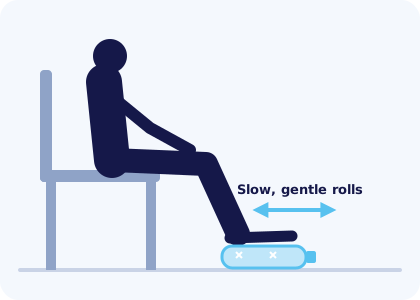
Frozen Water Bottle Roll
Target: Arch of the foot
- Freeze a small water bottle and wrap it in a thin cloth.
- Sit down and slowly roll it back and forth under your arch.
5–10 minutes · Once a day, e.g. at the end of the day
Tip: Do not use ice if you have reduced feeling in your feet, poor circulation, diabetes or Raynaud's. Check with your podiatrist first.
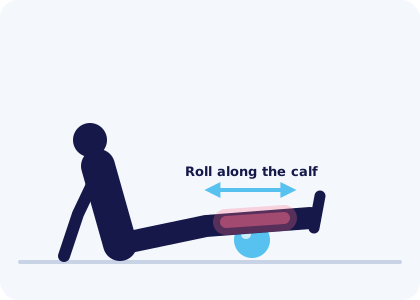
Calf Ball Release
Target: Calf muscles
- Sit on the floor with a massage ball or foam roller under your calf.
- Lift your hips slightly using your hands behind you for support.
- Slowly roll from just above the ankle to just below the knee. Pause on tight spots for 20–30 seconds.
1–2 minutes each leg · 1–2 times a day
Tip: Avoid rolling over varicose veins, bruising or a recent calf injury.
When to stop and contact your podiatrist
- Pain is sharp, or much worse during or after the exercises
- You feel numbness, tingling or burning in the foot
- Your heel pain is worse the next morning after exercising
- There is swelling, redness, bruising or warmth in the heel or calf
- Pain started after a fall, jump or sudden injury, or is present at night or at rest
Exercises are one part of the plan
For many people, stretching and rolling are used alongside other approaches. Depending on your assessment, your podiatrist may also discuss load and activity changes, footwear, orthotic therapy, strapping, soft tissue therapy or a strengthening program. You can read more about how we use stretching in treatment, or our overview of plantar fasciitis causes and treatment options.
Download your printable exercise sheet
All eight exercises with illustrations, on a printable PDF you can stick on the fridge or keep on your phone.
Download PDFImportant information
The information and exercises on this page are general in nature and are intended for educational purposes only. They are not a substitute for an individual assessment, diagnosis or treatment by a registered health practitioner. Not every exercise is suitable for every person. Please only complete these exercises as advised by your podiatrist or another registered health practitioner who has assessed you. Outcomes vary between individuals and no particular result can be guaranteed. If you are unsure whether an exercise is right for you, or your symptoms change or worsen, stop the exercise and seek advice from a health practitioner. In an emergency, call 000.
This page was prepared by Dr Bilal Khelladi, a podiatrist registered with the Podiatry Board of Australia. Dr Khelladi is not a registered medical practitioner. Last reviewed: September 2026.
References
- Koc TA Jr, et al. Heel Pain – Plantar Fasciitis: Revision 2023. Clinical Practice Guidelines. J Orthop Sports Phys Ther. 2023;53(12):CPG1–CPG39.
- DiGiovanni BF, et al. Tissue-specific plantar fascia-stretching exercise enhances outcomes in patients with chronic heel pain. J Bone Joint Surg Am. 2003;85(7):1270–1277.
- DiGiovanni BF, et al. Plantar fascia-specific stretching exercise improves outcomes in patients with chronic plantar fasciitis: a prospective clinical trial with two-year follow-up. J Bone Joint Surg Am. 2006;88(8):1775–1781.