Achilles tendinopathy is an overload problem of the tendon at the back of the heel. It usually causes stiffness first thing in the morning, pain at the start of exercise, and tenderness when the tendon is squeezed. It is common in runners, people who play court sports and people who have recently increased their walking.
The tendon generally responds well to the right amount of load. That is why a graded exercise program is the core of most Achilles tendonitis management plans, with footwear, heel lifts or orthotic therapy used alongside it where appropriate.
Midportion or insertional?
Pain in the middle of the tendon (2–6 cm above the heel) is called midportion tendinopathy. Pain right where the tendon attaches to the heel bone is insertional tendinopathy. The difference matters: people with insertional pain are usually advised not to let the heel drop below a step, as this can compress the tendon against the bone. Your podiatrist will tell you which type you have.
How much pain is OK?
A simple guide used by many clinicians: pain during exercise up to about 3–4 out of 10 is usually acceptable, as long as it settles within 24 hours and morning stiffness isn't getting worse week to week. If it is, reduce the load and speak with your podiatrist.
Before you start
- Stretches should feel like a gentle to moderate pull, not sharp pain.
- Move slowly. Don't bounce into a stretch.
- Do these as advised by your podiatrist, as part of your individual treatment plan.
- Some mild discomfort can be normal, but it should settle within a few hours.
The exercises
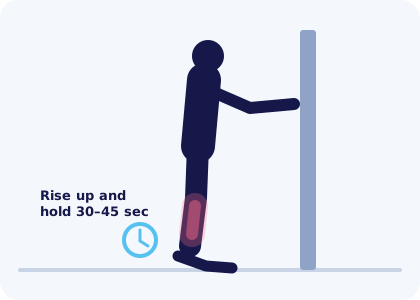
Heel Raise Hold
Target: Calf and Achilles tendon
- Stand facing a wall with your hands on it for balance.
- Rise up onto your toes on both feet.
- Hold the top position steadily, then lower slowly.
Hold 30–45 seconds · 5 times · Once a day
Tip: A good starting exercise when the tendon is irritable. Progress to one leg when comfortable.
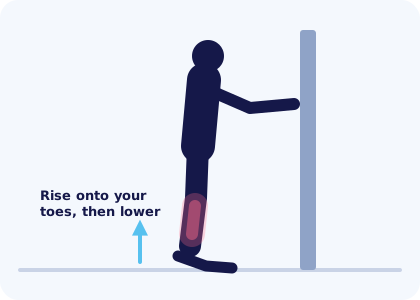
Double-Leg Heel Raises
Target: Calf strength
- Stand with feet hip-width apart, holding the wall lightly.
- Rise up onto your toes over 2–3 seconds.
- Lower back down over 3 seconds.
15 reps · 3 sets · Once a day
Tip: Keep the movement slow and controlled in both directions.
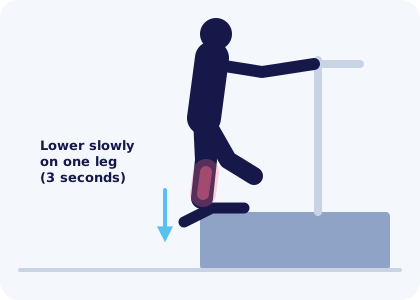
Single-Leg Heel Drop
Target: Calf and Achilles (midportion)
- Stand on a step on the ball of the affected foot, holding a rail.
- Use both legs to rise up onto your toes.
- Lift the good foot and slowly lower the affected heel over 3 seconds.
15 reps · 3 sets · Once a day
Tip: If your pain is at the heel bone (insertional), stop at level with the step. Don't drop below it.
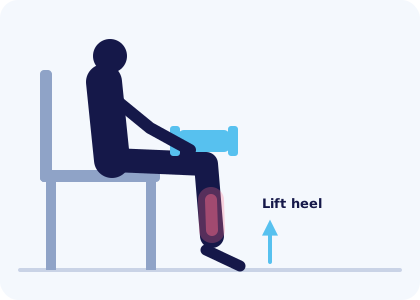
Seated Soleus Raise
Target: Lower calf (soleus)
- Sit with your knee bent at 90 degrees and a weight or heavy bag on your knee.
- Lift your heel as high as you can.
- Lower slowly.
15 reps · 3 sets · Once a day
Tip: The soleus takes a lot of load when running, so this one is often added as you progress.
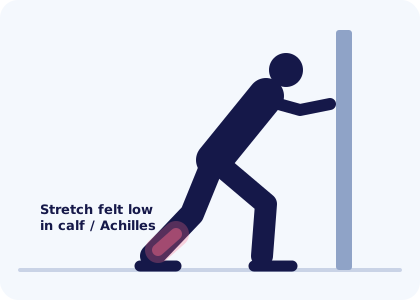
Bent-Knee Calf Stretch
Target: Lower calf and Achilles
- Face a wall with the affected foot behind.
- Keep the heel down and bend the back knee.
- Lean in until you feel a gentle stretch low in the calf.
Hold 30 seconds · 3 times · 2 times a day
Tip: Keep it gentle. A strong stretch can irritate some Achilles tendons.
Where footwear and orthotics fit in
Exercises build the tendon's capacity. Footwear and orthotics can reduce the load on it while that happens. Depending on your assessment, your podiatrist may discuss:
- Heel lifts or a small heel raise in the shoe, which shorten the pull on the tendon (often used for insertional pain).
- Supportive shoes with a slightly higher heel-to-toe drop, rather than flat or very flexible shoes.
- Custom foot orthoses where foot posture, such as a rolling-in (pronated) foot, appears to be adding strain to the tendon.
Orthotics are not a replacement for loading exercises. They are one tool that may make daily walking more comfortable while the tendon adapts.
When to see a podiatrist
- Sudden sharp pain at the back of the heel, a 'pop' or feeling of being kicked (this needs same-day medical review)
- Swelling, redness or warmth that is getting worse
- Pain that is not improving after 4–6 weeks of exercises
- Pain that stops you walking normally
Could orthotics be part of your plan?
If your foot posture or footwear is adding load to your Achilles, a heel lift or custom orthotic may be discussed as part of your plan.
Orthotics aren't right for everyone. An assessment at our Bankstown clinic looks at your symptoms, foot function and footwear first, so any recommendation is based on your situation. We see patients from Bankstown and surrounding suburbs.
Frequently asked questions
How long does Achilles tendinopathy take to settle?
It varies. Many people notice improvement within 6–12 weeks of consistent loading exercises, but tendons adapt slowly and some cases take longer.
Should I stop running?
Not always. Many people can keep running at a reduced level if pain stays within the guide above. Your podiatrist can help you plan this.
Can orthotics help Achilles pain?
They may help some people by reducing strain from foot posture or by lifting the heel. They are usually used alongside exercise, not instead of it.
Download your printable exercise sheet
All 5 exercises with illustrations, on a printable PDF with room for your podiatrist's notes.
Download PDFImportant information
The information and exercises on this page are general in nature and are intended for educational purposes only. They are not a substitute for an individual assessment, diagnosis or treatment by a registered health practitioner. Not every exercise is suitable for every person. Please only complete these exercises as advised by your podiatrist or another registered health practitioner who has assessed you. Outcomes vary between individuals and no particular result can be guaranteed. If you are unsure whether an exercise is right for you, or your symptoms change or worsen, stop the exercise and seek advice from a health practitioner. In an emergency, call 000.
This article was prepared by Dr Bilal Khelladi, a podiatrist registered with the Podiatry Board of Australia. Dr Khelladi is not a registered medical practitioner. Published October 2026.
References
- Alfredson H, Pietilä T, Jonsson P, Lorentzon R. Heavy-load eccentric calf muscle training for the treatment of chronic Achilles tendinosis. Am J Sports Med. 1998;26(3):360–366.
- Silbernagel KG, Thomeé R, Eriksson BI, Karlsson J. Continued sports activity, using a pain-monitoring model, during rehabilitation in patients with Achilles tendinopathy. Am J Sports Med. 2007;35(6):897–906.
- Hawke F, Burns J, Radford JA, du Toit V. Custom-made foot orthoses for the treatment of foot pain. Cochrane Database Syst Rev. 2008;(3):CD006801.