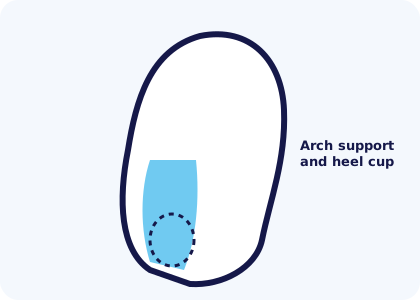
A foot orthotic only helps when you are wearing it. That's why a good orthotic therapy appointment starts with the shoes you wear most, not just your feet.
Orthotics and common types of footwear
| Footwear | Usually works with | Things to know |
|---|---|---|
| Running and sports shoes | Full-length or three-quarter orthotics | Remove the shoe's own insole first. Most sports shoes fit an orthotic easily. |
| Steel-cap work boots | Full-length orthotics with a cushioned top cover | Boots with a removable insole usually work well. Check with your employer if safety footwear rules apply. |
| Dress shoes and heels | Slim, low-profile orthotics | Space is limited. Shoes with a closed heel and a heel under about 4 cm are easiest. |
| Sandals | Sandals with a removable footbed | Some brands allow a slim orthotic. Others have a supportive footbed built in. |
| School shoes | Full-length or three-quarter orthotics | Choose school shoes with a removable insole and a firm heel counter. |
Why the shoe matters as much as the orthotic
An orthotic sits inside a shoe, so the shoe needs to hold the foot and the orthotic steady. A soft, collapsing heel counter or a shoe that twists easily can reduce how well the orthotic works. A good match between shoe and orthotic is usually more comfortable too.
Do I need more than one pair?
Some people find one pair moves easily between their shoes. Others, particularly people who switch between work boots and dress shoes, prefer a second pair made for a specific shoe. Your podiatrist can talk through what suits your week.
Common orthotic styles
- Full-length: runs the whole length of the shoe. Useful when cushioning or support under the forefoot is needed, and replaces the shoe's own insole.
- Three-quarter length: stops just behind the ball of the foot. Takes up less room, so it suits tighter shoes and boots.
- Slim or 'dress' style: a narrow, low-profile shell for fashion and dress shoes.
- Sports-specific: designed around the demands of a sport, such as football boots or cycling shoes.
Signs your shoe and orthotic aren't a good match
- Your heel lifts out of the shoe when walking
- Your toes feel squashed or rub on the top of the shoe
- The orthotic slides around or curls at the edges
- New blisters or pressure spots
- The orthotic feels comfortable in one pair of shoes but not another
Most of these can be fixed with small adjustments to the orthotic, a change of top cover, or a different shoe. Don't put up with discomfort; your podiatrist can check the fit.
Caring for your orthotics
- Take them out to air after exercise or a long day.
- Wipe clean with a damp cloth and mild soap. Avoid heat, including car dashboards and heaters.
- Bring them to review appointments so wear can be checked.
What to bring to your orthotic appointment
- The shoes you wear most (work, sport and everyday)
- Any orthotics or insoles you already have
- Shorts or loose pants so your legs can be assessed
- A list of your activities and how often you do them
When to see a podiatrist
- Foot, heel or leg pain that keeps coming back
- Pain that is worse in particular shoes
- Uneven wear on your shoes
- Old orthotics that feel less comfortable than they used to
Could orthotics be part of your plan?
Bring your everyday shoes to your appointment so your orthotics can be designed around the footwear you actually wear.
Orthotics aren't right for everyone. An assessment at our Bankstown clinic looks at your symptoms, foot function and footwear first, so any recommendation is based on your situation. We see patients from Bankstown and surrounding suburbs.
Frequently asked questions
Can orthotics go in any shoe?
No. Very flat, thin or narrow shoes often don't have room. Most sports shoes, work boots and school shoes do.
How long do orthotics last?
It depends on the materials, your weight and your activity. Many last a few years with normal use. Top covers usually wear out first and can often be replaced.
Important information
The information and exercises on this page are general in nature and are intended for educational purposes only. They are not a substitute for an individual assessment, diagnosis or treatment by a registered health practitioner. Not every exercise is suitable for every person. Please only complete these exercises as advised by your podiatrist or another registered health practitioner who has assessed you. Outcomes vary between individuals and no particular result can be guaranteed. If you are unsure whether an exercise is right for you, or your symptoms change or worsen, stop the exercise and seek advice from a health practitioner. In an emergency, call 000.
This article was prepared by Dr Bilal Khelladi, a podiatrist registered with the Podiatry Board of Australia. Dr Khelladi is not a registered medical practitioner. Published November 2026.
References
- Hawke F, Burns J, Radford JA, du Toit V. Custom-made foot orthoses for the treatment of foot pain. Cochrane Database Syst Rev. 2008;(3):CD006801.